NASA's Artemis Program: The Biological Challenges of Establishing a Lunar Colony
For the first time since the Apollo missions, humanity is preparing not merely to visit the Moon but to live and work there for extended periods—weeks, months, and eventually years. The US Artemis program represents a fundamental shift in space exploration, moving beyond the "flags and footprints" of the past to establish a sustained human presence, beginning at the lunar South Pole. However, this ambitious endeavor comes with brutal biological challenges that test the very limits of human physiology.
The Artemis Mission Timeline and Vision
The Artemis program unfolds in carefully planned stages. In 2022, Artemis I successfully tested the Space Launch System (SLS) rocket and Orion spacecraft on an uncrewed mission around the Moon. On April 1, 2026, NASA launched Artemis II, a ten-day crewed mission carrying four astronauts—Commander Reid Wiseman, Pilot Victor Glover, and Mission Specialists Christina Koch and Jeremy Hansen—around the Moon. This pivotal mission verifies life-support systems, navigation, thermal protection, and deep-space operations with humans onboard.
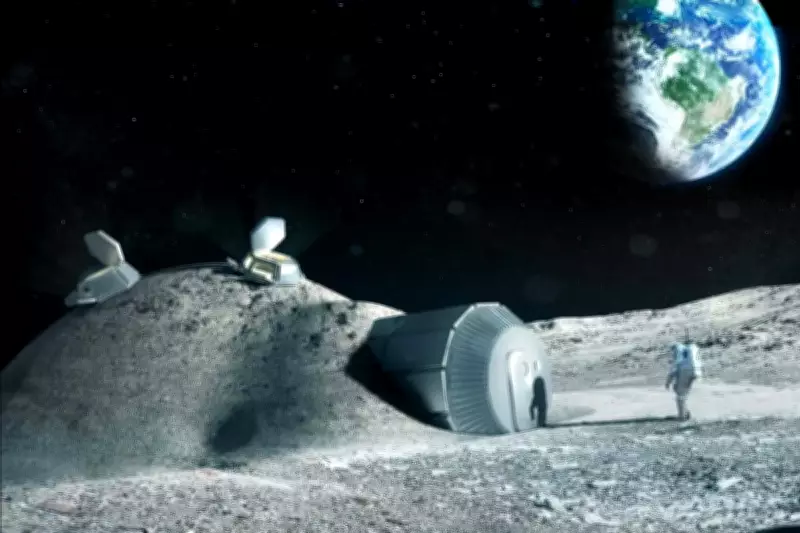
NASA's long-term vision extends far beyond a single landing, with plans to invest US$20 billion (£15 billion) in a lunar surface base. This base is designed to support repeated and progressively longer stays, teaching us how to operate sustainably beyond Earth. The knowledge gained will be crucial for future human missions to Mars, the ultimate horizon goal of deep-space exploration.

Health Challenges of Lunar Living
Living on the Moon challenges every organ system in the human body due to the unique space exposome—the combined physical, chemical, biological, and psychological stressors encountered beyond Earth. These include reduced gravity (about one-sixth of Earth's), chronic exposure to cosmic radiation, extreme temperature swings, toxic lunar dust, isolation, disrupted sleep-wake cycles, and prolonged confinement.
Unlike astronauts in low-Earth orbit, lunar crews operate largely outside Earth's protective magnetic field, increasing exposure to space radiation. This radiation can damage DNA, disrupt immune function, and subtly but seriously affect the brain and cardiovascular system. Reduced gravity also fundamentally alters how blood, oxygen, and fluids move around the body, potentially increasing vulnerability to neurological and vascular dysfunction over time.
To understand these risks, scientists must consider the space integrome—the way the brain, heart, blood vessels, muscles, bones, immune system, and metabolism interact as an integrated whole under space conditions. A small disturbance in one system sends ripples through others. Many space-related physiological changes develop insidiously, with complications simmering beneath the surface and only becoming apparent months or even years later, which is why NASA emphasizes long-term physiological monitoring and human risk mitigation in its Artemis science strategy.
Strategies to Reduce Health Risks
The encouraging news is that humans are remarkably adaptable, and space countermeasures are being developed to guide that adaptation in safe and sustainable ways. Exercise remains the cornerstone, with astronauts on the International Space Station spending around two hours daily to protect muscle mass, bone density, and cardiovascular function. On the Moon, however, exercise systems must be redesigned for partial gravity, where familiar Earth-based loading no longer applies.
Nutrition is another powerful countermeasure, influencing bone health, muscle maintenance, immune resilience, and even how the body responds to radiation. Personalized nutrition strategies, tailored to individual physiology rather than a "one-size-fits-all" menu, are likely to become increasingly important during long lunar missions. Artificial gravity is also being explored through short-radius centrifuges, which could expose astronauts to brief periods of increased gravitational loading to stabilize cardiovascular and neurovascular systems.

Radiation protection will rely on multiple layers of defence, including habitat shielding—potentially using structures made of lunar soil—early warning systems for solar storms, and operational strategies that limit exposure during high-risk periods. Crucially, countermeasures should be proactive rather than reactive, with continuous physiological monitoring, wearable sensors, and advanced data analytics allowing mission teams to detect early warning signs and intervene before small problems become mission-limiting.
The Broader Implications of Lunar Exploration
Spending extended time on the Moon will be awe-inspiring, offering views of Earth hanging motionless above a stark, silent horizon and working under a sky that never turns blue. Yet, it will also be demanding, uncomfortable, and unforgiving. The Moon is not just a destination—it is a test of our biology. If we can learn how to keep humans healthy, resilient, and productive on the lunar surface, we take a decisive step toward becoming a truly spacefaring species.
Artemis shows that exploration is no longer about brief heroics but about sustainability, adaptability, and understanding ourselves as deeply as the worlds we seek to explore. In learning how to live on the Moon, we may ultimately learn as much about life on Earth as we do about our future beyond it.