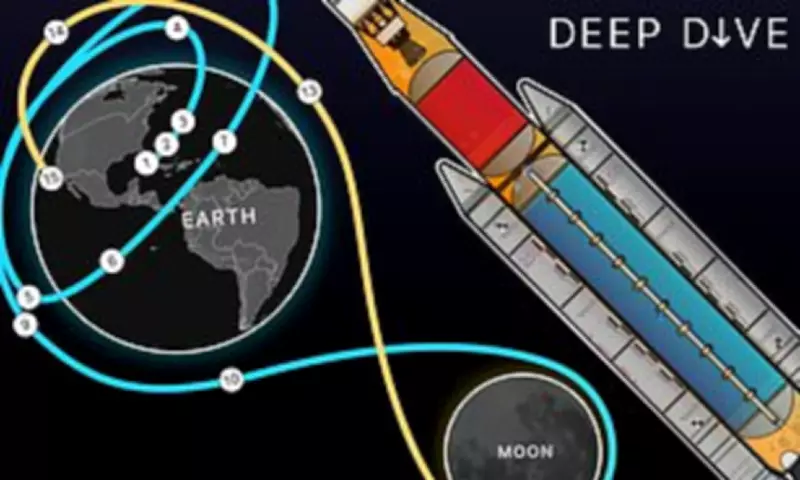
NASA's Ambitious Lunar Return: Inside the 50-Year Mission to the Moon
NASA is spearheading a monumental effort to return humans to the Moon, marking a significant milestone after a 50-year hiatus since the Apollo missions. This renewed lunar endeavor, known as the Artemis program, leverages cutting-edge interactive technologies and innovative spacecraft designs to achieve its goals. The mission aims not only to revisit the lunar surface but also to establish a sustainable human presence, paving the way for future Mars exploration.
Interactive Technologies Driving the Mission
Central to NASA's lunar return are advanced interactive systems that enhance mission planning, execution, and safety. These include virtual reality simulations for astronaut training, real-time data analytics for mission control, and autonomous navigation tools for spacecraft. By integrating these technologies, NASA aims to reduce risks and improve efficiency, ensuring that astronauts can operate effectively in the harsh lunar environment.
The Artemis program represents a collaborative effort, involving international partners and private companies, to develop the necessary infrastructure for long-term lunar habitation. Key components include the Space Launch System (SLS) rocket, the Orion spacecraft, and the Lunar Gateway, a space station orbiting the Moon that will serve as a hub for missions.

Historical Context and Future Goals
The last human landing on the Moon occurred in 1972 with Apollo 17, making this return a historic event after five decades. NASA's renewed focus is driven by scientific curiosity, technological advancement, and strategic interests in space resources. The Artemis program plans to land the first woman and the next man on the Moon by the mid-2020s, with subsequent missions aiming to build lunar bases and conduct extensive research.
This mission is not just about exploration; it also aims to test technologies for deep space travel, such as life support systems and radiation protection, which are crucial for future manned missions to Mars. Additionally, the lunar surface offers opportunities to study planetary geology and potential resources like water ice, which could support sustained human activity.
Challenges and Innovations
Despite the excitement, NASA faces significant challenges, including high costs, technical hurdles, and the need for reliable launch systems. However, innovations in robotics, artificial intelligence, and materials science are helping to overcome these obstacles. For instance, new spacesuit designs and habitat modules are being developed to withstand the Moon's extreme temperatures and low gravity.
The interactive aspects of the mission extend to public engagement, with NASA using digital platforms to share updates and involve global audiences in the journey. This transparency fosters support and inspires the next generation of scientists and engineers.
In summary, NASA's mission to return to the Moon after 50 years is a complex and ambitious undertaking, driven by interactive technologies and a vision for sustainable space exploration. As the Artemis program progresses, it promises to expand human horizons and unlock new possibilities in the cosmos.