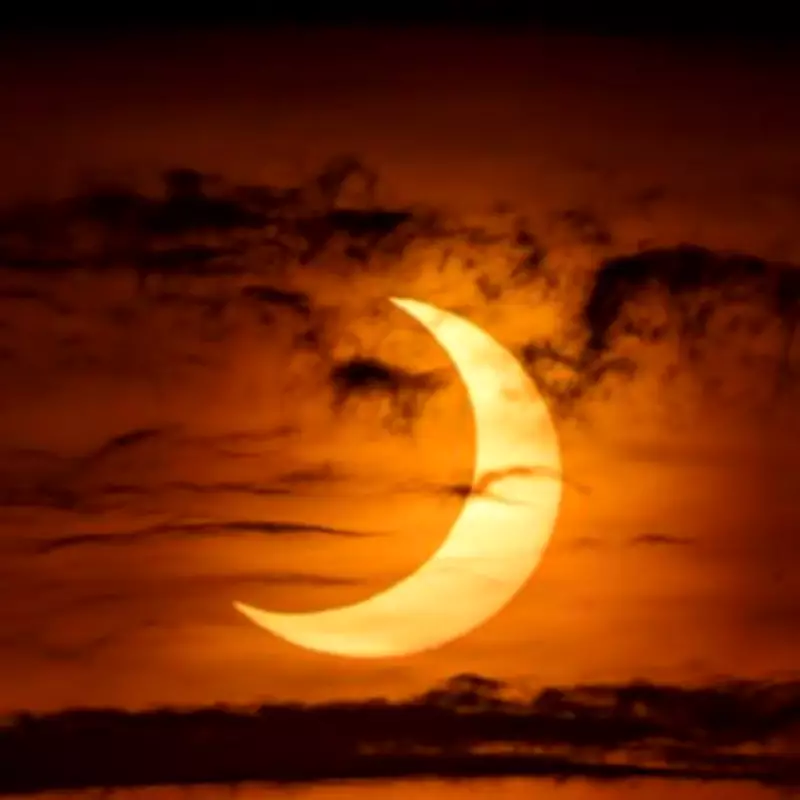
A rare astronomical spectacle is set to captivate skywatchers tomorrow as the 'ring of fire' solar eclipse takes place, offering a stunning display for millions across the globe. While the full annular eclipse will only be visible from the remote expanses of Antarctica, a partial solar eclipse will be observable from numerous countries, allowing an estimated 176 million people to witness this celestial event.
Visibility of the Partial Solar Eclipse
The partial solar eclipse will be visible from a wide range of locations, primarily in the Southern Hemisphere. Key regions include South Africa, Argentina, Chile, Madagascar, and Mauritius, along with other parts of southern Africa. For a comprehensive list of countries and territories where the partial eclipse can be seen, enthusiasts are encouraged to consult TimeAndDate.com, which provides detailed astronomical data and viewing times.
Timing and Follow-Up Events
The annular solar eclipse is scheduled for February 17, with the partial phases occurring throughout the day. Following this event, skywatchers can look forward to a lunar eclipse on March 2 and 3, adding to the excitement of this astronomical season. These eclipses are part of a natural cycle that occurs when the Earth, Moon, and Sun align in specific configurations.

Safety and Viewing Tips
Experts advise using proper eye protection, such as solar viewing glasses, to safely observe the partial solar eclipse. Direct viewing without protection can cause serious eye damage. Additionally, many astronomy clubs and organizations may host public viewing events, providing telescopes with solar filters for a closer look at the phenomenon.
This 'ring of fire' eclipse, where the Moon covers the center of the Sun, leaving a bright ring visible, is a relatively rare occurrence due to the precise alignment required. It serves as a reminder of the dynamic nature of our solar system and offers a unique opportunity for public engagement with science and astronomy.