The Fragile State of Earth's Crowded Orbit
For millennia, the space encircling our planet remained a pristine and vacant expanse, untouched by human activity. This all changed in 1957 when the Soviet Union launched Sputnik, a small metal sphere that marked the dawn of the space age. By the end of the 1950s, only a handful of objects orbited Earth, but this number began to swell rapidly as the space race intensified between the United States and the Soviets.
Exponential Growth in Orbital Objects
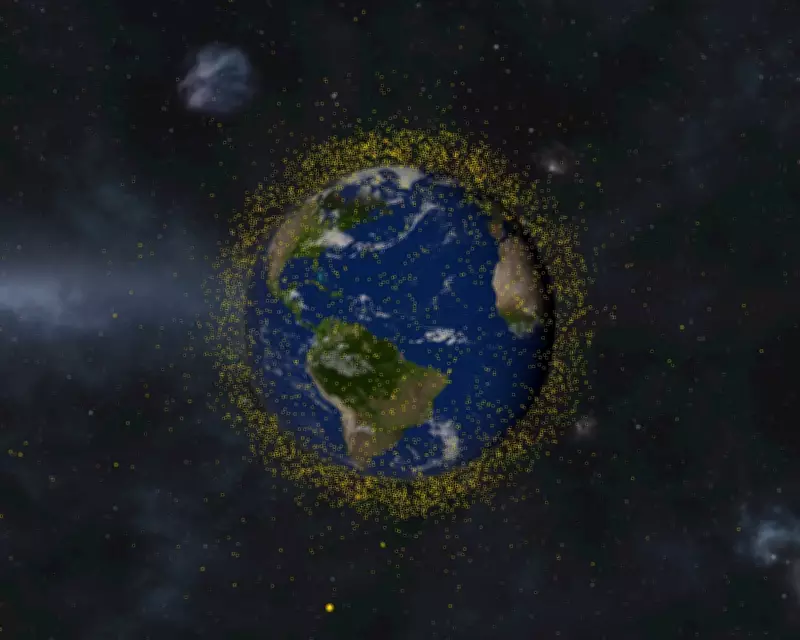
By the close of the 1970s, over 14,000 tracked objects had been launched, with approximately 7,000 still circling the globe. The 1980s and 1990s saw even more satellites deployed, pushing the total to around 20,000 by the turn of the millennium. In the 21st century, private companies entered the fray, launching satellites at an unprecedented pace. Today, Earth's orbit is packed with about 32,000 objects, including active satellites and fragments, all moving at immense speeds. Some projections suggest this figure could exceed 60,000 by the end of this decade.
The types of satellites have diversified significantly, encompassing communication, weather, navigation, and Earth observation technologies. This growth has transformed orbit from a domain of scientific and military missions into a bustling hub of public and private infrastructure.

The Rise of Mega-Constellations and Debris
The shift from government-led missions to private ventures accelerated with companies like SpaceX, which launched its Starlink satellites in 2019, heralding the era of mega-constellations. These systems rely on thousands of smaller, mass-produced spacecraft to provide global internet coverage, with other players such as Amazon joining in. However, this surge has brought with it a significant increase in space debris, including discarded rocket stages, defunct satellites, and fragments from collisions.
The United States and Russia, accounting for former Soviet launches, are responsible for the largest number of orbital objects. China and France have also launched over 1,000 objects each. Notably, the US and China have become increasingly dominant, with the US launching 49% of its total satellites in the 2020s, compared to Russia's mere 1%.
Collision Risks and Chain Reaction Fears
The crowding of orbit has elevated the risk of collisions, with incidents like the 2009 crash between a US satellite and a defunct Russian military satellite generating tens of thousands of high-velocity fragments. The primary concern is a potential domino effect, where collisions create a cascade of debris that could render space launches too hazardous, effectively trapping humans on Earth.
Jonathan McDowell, a former astrophysicist at the Harvard-Smithsonian Center for Astrophysics, has spent decades tracking orbital objects. He warns that while a chain reaction might unfold over decades, the current system is fragile. "This feels fragile," McDowell says. "All you need is for two players to screw up on the same day." He notes that satellite operators must constantly maneuver their craft to avoid collisions, and if this cooperation falters, the situation could spiral out of control within days or weeks.
Mitigation Efforts and Future Outlook
To reduce risks, space agencies are testing methods to deorbit large defunct satellites, such as using nets, robotic arms, or high-powered lasers. The United Nations is nearing a registry for all orbital objects, but debates persist among astronomers over light pollution and traffic management. As launches continue to soar, the need for effective regulation and cleanup strategies becomes ever more urgent to prevent a catastrophic debris layer from forming around our planet.