

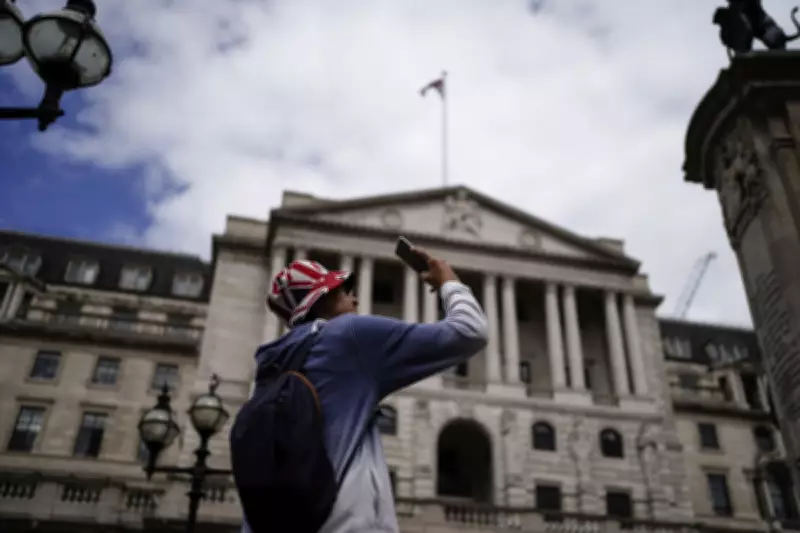
The Bank of England has opted to press pause on interest rate reductions, holding the base rate steady at 3.75 per cent in a move driven by growing concerns over the inflationary impact of the war in Iran. This decision marks a shift from earlier expectations of a cut, reflecting heightened economic uncertainty in the face of geopolitical tensions.
Unanimous Vote Highlights Economic Caution
In a unanimous vote, the Bank's Monetary Policy Committee (MPC) chose to maintain borrowing costs, underscoring a cautious approach amid volatile global conditions. Prior to the US bombing of Iran, City analysts had widely anticipated a rate cut, believing inflation was under control and unemployment was becoming a pressing issue. Lower rates were seen as a way to support mortgage holders and encourage business hiring.
However, the spike in oil and gas prices following the outbreak of hostilities has forced a reassessment. The Bank, led by Governor Andrew Bailey, had cut rates four times in 2025, but now faces a more complex landscape. City economists, including those at Goldman Sachs, still project two or three rate cuts later this year, but the timing hinges on the resolution of the Iran conflict and a subsequent decline in energy prices.

Expert Analysis on the Hold Decision
Philip Shaw at Investec commented, "The Bank of England's decision to keep interest rates unchanged is really no surprise at all. A month ago, there had been speculation over a possible cut, but the hostilities with Iran have caused a surge in oil and gas prices which will be inflationary if sustained. We would not rule out reductions in rates later this year but first we need to see an end to the Iranian conflict and energy prices begin to come back down again as evidence that the UK is not staring a period of higher inflation in the face."
In the UK, government bond yields have risen, pushing up the cost of new mortgages. While there has been some discussion of "fuel rationing," experts deem this unlikely, as the UK can import oil and gas from sources like America and Norway. Economists now expect the Bank to maintain rates at least until summer, monitoring inflation closely to prevent it from spiraling out of control.
Market Expectations and Inflation Targets
Global markets are largely betting that the Iran conflict will conclude soon, leading to a drop in oil prices and easing inflationary pressures. When oil prices peaked last week, speculation arose that the next rate move could be an increase rather than a decrease. Peter Goves at MFS Investment Management countered this, stating, "Depending on the magnitude and duration of the shock, the Bank of England could resume cutting but only later on in the year. We struggle with the idea the Bank of England can or will hike any time soon, which will largely weigh on an already delicate demand backdrop."
City economists still forecast the base rate to end the year at 3 per cent, assuming inflation does not exceed its current 3 per cent level. The Bank's official inflation target remains 2 per cent. Paul Dales at Capital Economics noted, "Just a couple of weeks ago it looked as though the Bank's Monetary Policy Committee (MPC) was nailed on to cut interest rates to 3.50 per cent. What's more, at the previous policy meeting in February Governor Bailey said 'I don't want to endorse 3.25 per cent, but it is a reasonable market curve'."
Impact on Property and Consumer Spending
Andrew Lloyd, Managing Director at national property firm Search Acumen, highlighted the broader implications: "The decline in interest rates over the past 18 months has been welcome, but today's decision to wait and hold signals to markets to do the same. This will still hit consumer's pockets, pressing pause on the immediate need for both domestic investor spending and affordable mortgage rates as banks pull mortgages like it's Truss 2.0. There is an argument that after property tax reform last year dampened buyer spirits and the final fade-out of COVID-era cheap borrowing, home movers need more reasons to make their move, not less."

The wait-and-see stance adopted by the Bank of England may set a precedent for other central banks worldwide, as they navigate similar economic uncertainties stemming from the Iran conflict. The decision reflects a balancing act between supporting economic growth and containing inflation, with all eyes on geopolitical developments and energy market trends in the coming months.





