German Growth Forecasts Slashed as Europe Battles Iran War Price Shock
Economic experts have dramatically reduced their growth projections for Germany, Europe's largest economy, for both 2026 and 2027. This revision comes as governments across the continent scramble to introduce measures aimed at softening the severe price impact stemming from the ongoing Iran war.
Revised Economic Projections for Germany
A consortium of five leading economic institutes now predicts that German gross domestic product will expand by a mere 0.6% this year. This figure represents less than half of the 1.3% growth forecasted in September. For 2027, the forecast has been adjusted downward to 0.9% from a previous estimate of 1.4%. These revised outlooks fall significantly below the German government's own projections issued two months prior, which anticipated growth rates of 1% and 1.3% respectively.
The Iran conflict has introduced a formidable new obstacle to economic growth across Europe. The annual inflation rate within the 21-nation eurozone accelerated to 2.5% in March, up from 1.9% the previous month. This surge is largely attributed to a sharp 4.9% increase in energy prices, driven by the war and the subsequent blocking of the strategic Strait of Hormuz, which has sent global fuel costs soaring.

Expert Analysis and Government Response
Timo Wollmershäuser, an expert with the Munich-based Ifo institute, which contributed to the joint forecast, provided critical insight. "This energy price shock is impacting a German economy that was just beginning to recover last year following a multi-year downturn," he stated. Wollmershäuser added that while the shock "will dampen this recovery in Germany, it should not completely halt it." He pointed to planned government expenditures on defense and infrastructure as potential stabilizing factors. Germany's economic output did grow by 0.2% last year, marking a reversal after two consecutive years of contraction.
Wollmershäuser cautioned against what he termed "short-term activism," specifically criticizing government-mandated fuel price cuts. He argued such measures would be "costly, benefit many individuals who do not require relief, distort the crucial scarcity signal conveyed by market prices, and sustain demand for crude oil."
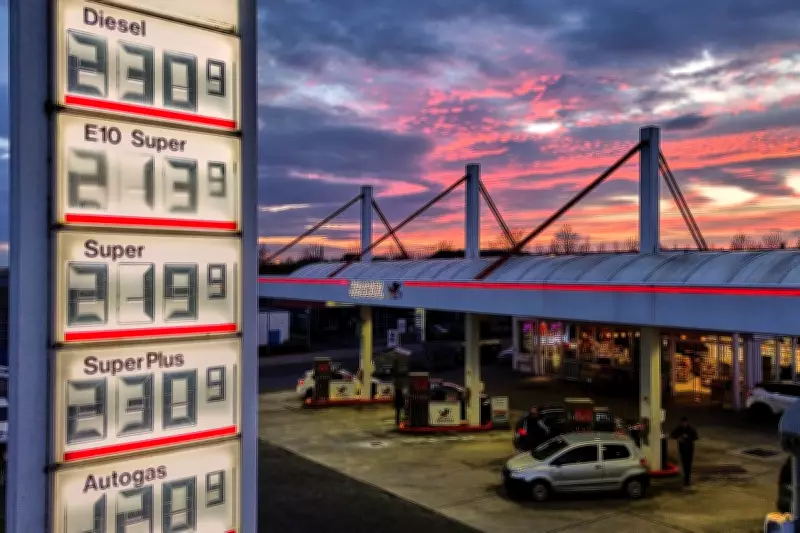
Germany's initial response has been measured. Legislation enacted on Wednesday now permits gas stations to adjust prices only once daily, at midday, in an effort to stabilize volatile pump costs. The new law also empowers the national antitrust authority with enhanced capabilities to combat excessive fuel pricing.
Broader European Measures and Warnings
Other European nations have adopted more aggressive interventions, despite the European Union's executive commission urging member states to "consider promoting demand-saving measures" and "refrain from actions that could increase fuel consumption."
- Poland has implemented temporary measures including daily government-set maximum fuel prices, with fines of up to 1 million zlotys (approximately $268,000) for non-compliant companies, alongside temporary fuel tax reductions.
- Austria enacted fuel tax cuts on Wednesday, directly lowering pump prices.
- Sweden's government is proposing reduced taxes on gasoline and diesel effective May 1. Additionally, it halved the value-added tax on food and beverages from 12% to 6% on Wednesday.
- Latvia and Lithuania plan to cut duties on diesel.
- Non-EU member Norway implemented temporary fuel tax reductions on Wednesday following a parliamentary vote last week.
Despite these efforts, the EU's energy commissioner issued a sobering warning on Tuesday, indicating that oil and gas prices are unlikely to return to normal levels swiftly, even if peace is rapidly achieved in the Middle East.
Long-Term Implications and Structural Reforms
Wollmershäuser noted that the German forecast assumes the Strait of Hormuz will become passable again in the second quarter, with energy prices declining from summer onwards, "but without reaching the pre-war level."

This economic disruption coincides with Chancellor Friedrich Merz's governing coalition contemplating extensive reforms to address Germany's deeper structural challenges. These include high production costs, sluggish private investment, and increasingly burdensome health and pension systems, all of which are critical to boosting long-term growth.
Economy Minister Katherina Reiche emphasized the urgency, stating, "The message from the latest growth forecast is unequivocal: the conflict in the Middle East is intensifying the pressure on German politicians to pursue structural reforms with determination and force."