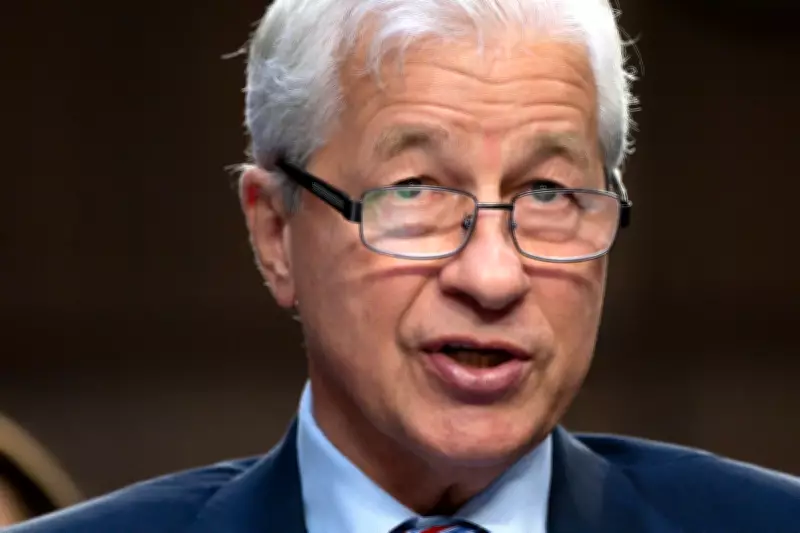
JP Morgan CEO Jamie Dimon Endorses Military Action Against Iran
In a surprising departure from his typically cautious stance, JP Morgan Chase CEO Jamie Dimon has publicly expressed support for the United States and Israel's military campaign against Iran. Speaking in an interview with Axios, Dimon described the action as "overdue," citing Tehran's long history of posing a significant global threat.
Economic Uncertainty Versus Strategic Necessity
Dimon acknowledged that the conflict creates substantial "uncertainty" and "short-term risks" for financial markets and the broader economy. However, he argued that confronting Iran represents a more critical priority for global stability. "Why the Western world put up with these proxy wars for 45 years is kind of beyond me," Dimon stated from JP Morgan Chase's new global headquarters in Manhattan.
The banking chief specifically rejected claims that US-Israeli strikes lacked justification due to an absence of imminent threat. "They've been killing people around the world for 45 plus years. They've killed a lot of Americans. They funded not just Hamas, Hezbollah, the Houthis, they have terror cells here," Dimon emphasized.

Recession Concerns and Global Economic Implications
Earlier this week, Dimon confessed to CBS News that he remains uncertain whether the Iran conflict will become a "tipping point" that pushes the United States into a recession. "The economy is one big, complex beast, and even AI can't figure it out," he remarked. "I tell people anything that happens is a straw on the camel's back. So maybe one day the straw's gonna cause that tipping point and push us through a recession."
Dimon added that "the war is a couple straws on that camel's back," but maintained that "what's more important to the future of the world is that the war is successfully concluded." He expressed hope that the situation would not lead to stagflation, a combination of stagnant economic growth and high inflation.
When questioned about whether the United States needs to reopen the Strait of Hormuz, a critical waterway through which approximately 20 percent of global oil and gas flows, Dimon responded, "I don't know the answer to that question." He nevertheless warned that "it would be a real problem for the global economy" if the strait remained closed. According to The Wall Street Journal, former President Donald Trump recently told aides he was considering ending the campaign against Iran without breaking their blockade of the strategic passage.
Contrast With Previous Foreign Policy Positions
Dimon's hawkish comments mark an unexpected shift from his typically more liberal approach to US foreign policy. While he has consistently opposed "America First" isolationism, he has previously emphasized the human and economic costs of military interventions.
Following Hamas's attack against Israel on October 7, 2023, Dimon warned of "the most dangerous time the world has seen in decades" and highlighted potential "far-reaching impacts on energy and food markets, global trade and geopolitical relationships." At that time, he admitted to significant concerns about economic repercussions, stating, "My caution is that we are facing so many uncertainties out there."
In his 2024 annual shareholder letter, Dimon argued against international isolationism and urged Americans "to find ways to put aside our differences and work in partnership with other Western nations in the name of democracy." He wrote that "the ongoing wars in Ukraine and the Middle East continue to have the potential to disrupt energy and food markets, migration, and military and economic relationships, in addition to their dreadful human cost."
Regarding Ukraine, Dimon has consistently supported US assistance in resisting Russian invasion as part of a broader need to counter authoritarianism globally. His latest comments on Iran, however, represent his most explicit endorsement of military action to date, balancing strategic concerns against acknowledged economic vulnerabilities.