

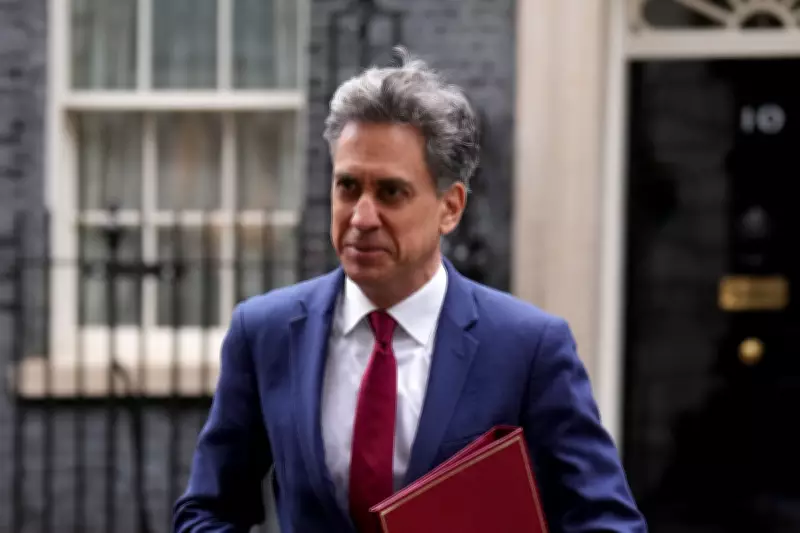
What happened to Labour’s pledge to cut energy bills? While the short answer is ‘Iran’, the government’s daft promises have made a rod for its own back, says Sean O’Grady.
Energy Bills Rise Despite Pledge
Now that we know our energy bills will be going up, for an average household, by 13 per cent from today (including 20 per cent for gas heating), with another hike in October, we may well ask whatever happened to Labour’s pledge to reduce energy bills? The short answer is: “Iran”. Or, if you prefer, Trump. It’s not our war, but it is our problem, and it’s making us poorer in all sorts of ways by depressing economic growth, pushing inflation up, making mortgages more expensive, damaging businesses and worsening the public finances.
On this occasion it is difficult to blame the government for the disruption of supplies through the Strait of Hormuz. On the other hand, it is also fair to say that, given the previous, similar, experience of what happened after Russia invaded Ukraine, and numerous other previous energy price shocks, it was always a daft pledge to make. As we know to our cost, the price of energy is set by global forces well out of the control of even the most mighty of governments; just ask anyone at the filling station in Trump’s America about the cost of gasoline.

The Origin of the Pledge
Don’t make promises you can’t keep should be one of the first lessons of politics, because even if they can get you into power by winning an election they will also propel you out on a wave of public anger. As we see. In its purest, daftest form, the Labour energy price pledge can be traced back to a pre-manifesto document from June 2024, entitled “My First Steps for Change”, signed by Keir Starmer and accompanied by an image of him at his most stolid, jacket off, sleeves up, ready to deliver. It states: “Great British Energy is part of Labour’s Green Prosperity Plan to create 650,000 good jobs, cut bills by £300 on average and deliver real energy security.” That’s the figure – £300 – that Kemi Badenoch keeps chucking at him over the despatch box at PMQs, although, tellingly, the specific £300 promise is not to be found in the finished manifesto.
Partial Savings and Realities
The irony here is that, at least for a relatively narrow section of the population, a total £300 reduction in energy bills was very much in prospect for this year, in the sense of bills being lower than they would otherwise be, and even now some people will benefit. The Ofgem price cap was down in April, before the war in Iran – leaving average households £114 better off. That fall in the price cap was driven by the chancellor’s decision to drop certain green levies on energy bills. In addition, and still in place, is the £150 off bills for those eligible for the “warm home discount”, principally people on benefits. With a bit of luck, that would make about £300; and if Labour was being cheeky they’d throw in the partial restoration of the pensioners’ winter fuel allowance of £300, albeit it is now means tested and they did try to scrap it entirely.
That still leaves us with that original claim that Great British Energy and the drive for renewables and Net Zero would actually cut bills by an unspecified amount and which is actually still policy, as set out in the King’s Speech: “Energy independence must be a long-term goal of national security and that the nation’s energy security requires long-term investment and reform, as demonstrated by recent events in the Middle East. Increased production of clean British energy will help to ensure that enemies of the United Kingdom cannot attack the economic security of the British people.” Hence the Energy Independence Bill to “scale-up homegrown renewable energy and protect living standards for the long-term”. It is Ed Miliband’s great mission in life, and his enemies loathe him for it, but I’ve never seen anyone refute the case he makes.

The Challenge of Investment
The problem is paying for the costly investment. This strategy – getting bills down through cheap green power from solar panels, wind turbines and nuclear reactors – is what is now being challenged by the right, with Tony Blair joining in the chorus to open up exploitation of fossil fuel reserves in the North Sea. Yet the inconvenient fact remains that unless some sort of nationalisation of those assets in the UK sector forces their cost lower, any extra oil and gas being pumped up ends up being sold to British businesses and households at inflated world prices. Britain is not Opec, a big enough producer to shift world prices lower by opening up the taps (and even Opec isn’t the force it once was). It is one of the few points in Blair’s long and compelling essay that is glaringly, and unhelpfully, wrong.
If we want to make Britain a success in the AI revolution, then we will indeed need plentiful and cheap electricity to run the data centres, and the best way to do that is renewables that won’t run out and can’t be shut off by dictators. It’s probably unkind to Blair, and his various successors across three parties all the way to Rishi Sunak, to point out that had they invested rather more purposefully in renewables and nuclear power while the British economy was growing and interest rates were near zero the UK would not now be so perilously reliant on the volatile supply of imported fossil fuels and enduring yet another energy crisis. As Tony says, policy should really come before politics, and while Net Zero is falling out of fashion the “business case” for energy independence has never been stronger. As for climate change, just feel the heat.





