

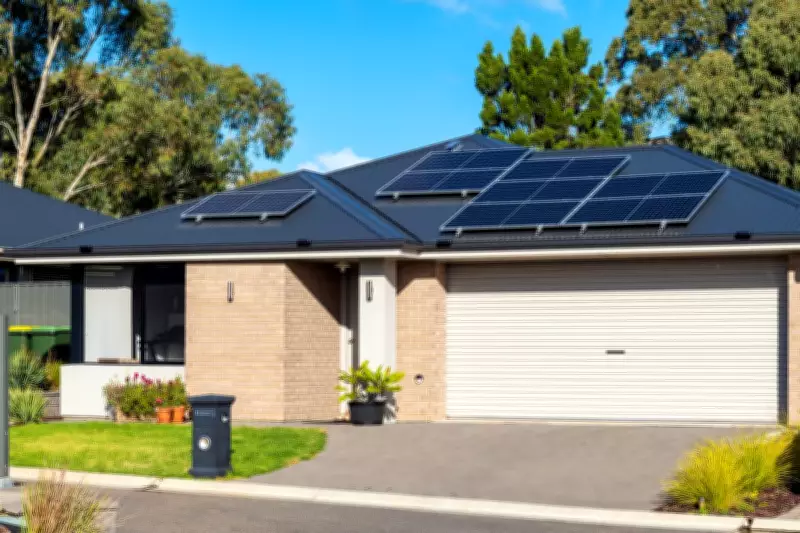
A combination of rooftop solar, insulation, and efficient appliances can halve energy bills in rental homes, according to experts. New research from the Institute for Energy Economics and Financial Analysis (IEEFA) reveals that renters could collectively save $20 billion on energy bills within a decade if landlords invest in these upgrades.
The Split Incentive Problem
Renters make up nearly a third of Australian households, yet many miss out on energy-saving improvements like insulation, efficient appliances, and rooftop solar. The main barrier is what analysts call the "split incentive": landlords are responsible for upgrades but do not benefit from lower energy bills, so they have little financial motivation to act.
IEEFA energy finance analyst Jay Gordon explained: "The responsibility to do a lot of these household energy upgrades rests with the landlord. But because they don't get the energy bill savings, there's essentially no financial motivation for them to do it."

This split incentive explains why only 11% of renters have solar panels compared to 44% of owner-occupiers, according to separate research from Energy Consumers Australia.
Modelling the Savings
IEEFA modelled thousands of scenarios across different household types in every state and territory. They found that in most cases, a combination of efficiency upgrades, efficient appliances, and rooftop solar could halve energy bills compared to a poorly performing home. Collectively, these upgrades could save renters $20 billion within a decade and $107 billion by 2050, outweighing the capital costs.
However, Gordon stressed that regulation is needed to overcome the split incentive. Victoria has already introduced minimum energy efficiency standards for rental properties, set to take effect from March next year. IEEFA recommends a coordinated approach across all states and territories, including a requirement to replace gas or inefficient electric appliances with efficient electric alternatives when they break down. For non-appliance improvements like rooftop solar or batteries, standards could give landlords flexibility to choose from a range of upgrades.
Future reforms could also make eligibility for federal tax incentives, such as negative gearing, conditional on properties meeting minimum standards.
What Tenants Can Do
Independent energy consultant Tim Forcey, author of My Efficient Electric Home Handbook, noted that tenants can take steps without involving landlords. In homes with reverse cycle air conditioning, people can save money immediately by using split systems for heating instead of gas. Switching out shower heads, draft-proofing, and closing wall vents are reversible steps that reduce energy costs. "If you've got a shower head that's using two or three times as much water as it needs to, that can be a big saving," Forcey said.
Covering windows with bubble wrap works like double-glazing, making rooms warmer while letting light through. In summer, a perforated foil product can be fitted inside windows and skylights to reflect heat and keep homes cooler.
Broader Benefits
The benefits of upgrading rental properties extend beyond households. Energy savings would ease strain on power networks during peak demand periods. "In most regions, the upgrades delivered a net reduction in average-day peak electricity demand in summer and winter, even if some renters increased their electricity consumption following the upgrades," Gordon said. In regions like Victoria, where gas appliances are widespread, upgrading rental properties would also free up gas supply for critical industries.






