

Exploring Mexico City Through Frida Kahlo's Enduring Legacy
The Independent's journalism receives support from our readers. Commissions may be earned through purchases made via links on our site.
Travel Focus: Tracing Frida Kahlo's Path in Mexico City
In anticipation of the significant summer exhibition at Tate Modern, a pilgrimage to the artist's homeland to visit her former residences, studio, and dedicated museums allowed Sara Darling to genuinely appreciate Kahlo's ongoing cultural significance. Sunday 19 April 2026 06:00 BST.
The artist Frida Kahlo appears everywhere throughout Mexico City – in vibrant murals, bustling markets, prestigious galleries, and even on restaurant signage. Initially arriving as a self-proclaimed superfan primarily familiar with her monobrow, flower crowns, and Tehuana dresses, five days following what was loosely termed the "Frida trail" revealed far greater depth to the icon than previously understood.

Beginning at Casa Azul: The Blue House Museum
Starting at Museo Frida Kahlo in Coyoacan, famously known as Casa Azul, the first impression involved street sellers briskly trading flower crowns outside the distinctive cobalt-coloured walls. Booking the first 10am entry slot, noting closure on Mondays, this pilgrimage commenced at both the artist's birthplace and final residence. Donated posthumously to Mexico in 1957 by her husband Diego Rivera to preserve her legacy after her 1954 death, the estate and gardens in Colonia del Carmen remain open to the public, maintained much as during Kahlo's lifetime, housing significant artwork collections and extensive personal memorabilia.
Casa Azul in Mexico City remains dedicated to Frida Kahlo as her final residence, managed by Mexico City Tourism Board.
Kahlo endured a catastrophic accident at age eighteen, bedridden for months with doctors doubting her survival. Viewing the narrow bed with its mirrored canopy, devised by her mother for occupation, and the oil paints borrowed from her father that launched her artistic journey proved emotionally moving. The bedroom feels stark and confined, with her repeated self-portraits potentially seen less as artistic choice and more as practical necessity, asserting control over a repeatedly failing body.
Personal Touches and Intimate Spaces
Elsewhere, nods to her tumultuous love affair with Rivera include yellow kitchen tiles spelling their names, a vast folk art collection reflecting shared commitment to Mexicanidad, alongside personal letters, customized corsets, and clothing items.
Casa Estudio Diego Rivera y Frida Kahlo offers clear insight into the couple's volatile dynamic.
A short walk away, Casa Roja, opened to the public in late 2025, presents something altogether more intimate. Purchased by Kahlo's parents in 1930 and becoming her sister Cristina's household, where Casa Azul feels like a showpiece, Casa Roja feels genuinely lived-in, its atmosphere shaped less by mythology and more by memory. Until 2023, Mara Romeo Kahlo, Frida's grandniece and prominent heir, resided here, where Kahlo assisted single mothers by establishing a weekly food pantry providing kitchen staples for women in need. This space reveals Kahlo as a child through father Guillermo's photographs, alongside early sketches, letters, and personal belongings, serving as homage to Kahlo rather than her relationship with Rivera, allowing a different, less iconic version to emerge, perhaps closest to revealing her without legendary weight.
Artistic Perspectives in Mexico City's Centre
Leaving Coyoacán for Mexico City's historic centre offers another perspective. At Museo de Arte Moderno in Chapultepec Park, encountering arguably her most recognized work, Las Dos Fridas, proved larger, sharper, and more confrontational than expected despite endless reproduction. Painted in 1940 post-divorce from Rivera, depicting two self-versions with exposed hearts joined by a single vein, often interpreted as portraying heartbreak, it reads more as deliberate self-definition, presenting multiple identities on Kahlo's own terms.

Further south in San Angel, Museo Casa Estudio Diego Rivera y Frida Kahlo provides among clearest insights into the couple's volatile dynamic. Designed in the 1930s by Juan O'Gorman, the complex comprises two stark, functional houses linked by a narrow bridge, architecture as biography: space built for work over domestic life, holding relationship fractures. Here Kahlo discovered Rivera's affair with sister Cristina, betrayal echoing through later paintings.
Within this enclave, Kahlo's vivid blue studio sits alongside Rivera's deep red counterpart, both enclosed by towering organ pipe cacti. Rivera's space remains cluttered and alive with materials, filled with cartonería collection, paintbrushes, palettes, and easels. Kahlo's appears stark in contrast as much work moved to Casa Azul; however, her intact bathroom inspired What the Water Gave Me (1938), deeply personal reflection on time, memory, and physical life toll.
San Angel's Bohemian Atmosphere
The former seventeenth-century monastery, San Angel Inn, has long attracted artists, writers, and visitors.
San Angel itself feels worlds away from city centre intensity, with traditional haciendas, cobbled streets, and vibrant Bazar Sabado held in and around Plaza San Jacinto. Stalls spill across the cobbled square selling handwoven textiles, ceramics, jewellery, and folk art. San Angel Inn remains worth visiting; behind heavy wooden doors, this former monastery maintains easy, bohemian atmosphere, ideal for courtyard margaritas often accompanied by live music or extended lunches.
Final Pilgrimage Stops: Xochimilco and Anahuacalli
The pilgrimage's penultimate part led to Xochimilco and Museo Dolores Olmedo, reopening end-May after extensive renovation, situated in stunning grounds where peacocks roam. This former hacienda houses largest private collection of works by Kahlo and Rivera. Olmedo, friend to Kahlo and lover to Rivera, maintained complex relationships while supporting both. Museum's most important pieces include The Broken Column and Self Portrait with Small Monkey.
From here, short drive to Museo Anahuacalli – volcanic-stone temple feeling as much manifesto as museum. Originally, Rivera and Kahlo planned 1930s farm here, but Rivera's vision evolved into more ambitious monument to Mexican identity, designed to house vast pre-Columbian artefact collection. Opened 1964, seven years post-death, it stands as powerful expression of cultural world shaping both.
Kahlo's Constant Presence in Mexico City
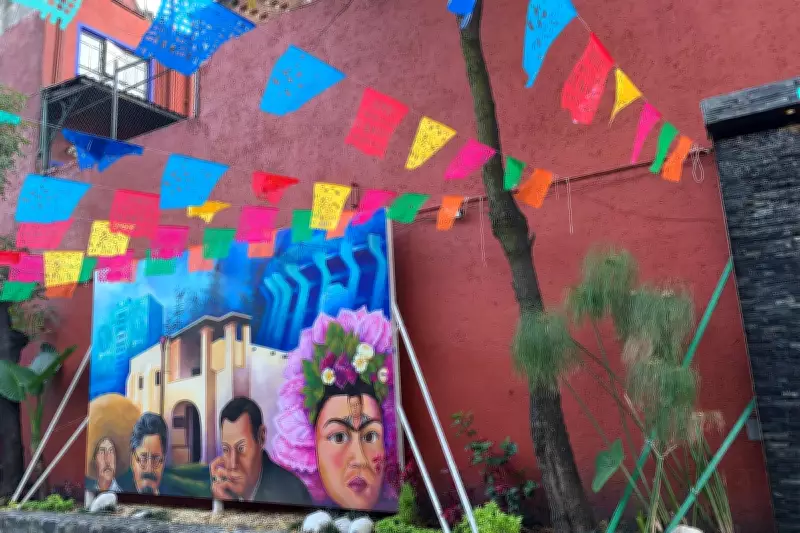
Mexico City itself remains vast, restless, constantly reinventing, but Kahlo persists as constant. She appears everywhere – in murals, markets, galleries, restaurant signs, her image endlessly reinterpreted. Transcending surname to become mononym, here she feels less like icon and more like constant presence, woven into city fabric that made her.
Sara's tour and flights were provided by Journey Latin America.
Practical Travel Information
Where to Stay: The Mondrian Mexico City offers oasis in city, with exclusive signature Ara Starck murals in every room. Situated in Condesa neighbourhood, within easy walking distance of award-winning restaurants and leafy parks.
How to Do It: British Airways operates direct flight from London Heathrow to Mexico City once daily in peak season. Journey Latin America offers thirteen-day Mexico itinerary, with five nights in Mexico City, from £4,500 per person. Price includes international flights from London, transfers, hotel stays on B&B basis, excursions covering Frida Kahlo's Blue House and Red House, Floating Gardens of Xochimilco, Museum of Bella Artes, Museum of Anthropology, and walking tour of Zocalo and Coyoacan.
Alternative Experience: If unable to visit Mexico City, summer exhibition at Tate Modern, "Frida Kahlo: The Making of an Icon" running 25 June 2026 to 3 January 2027, offers comprehensive journey through her short, colourful life.





