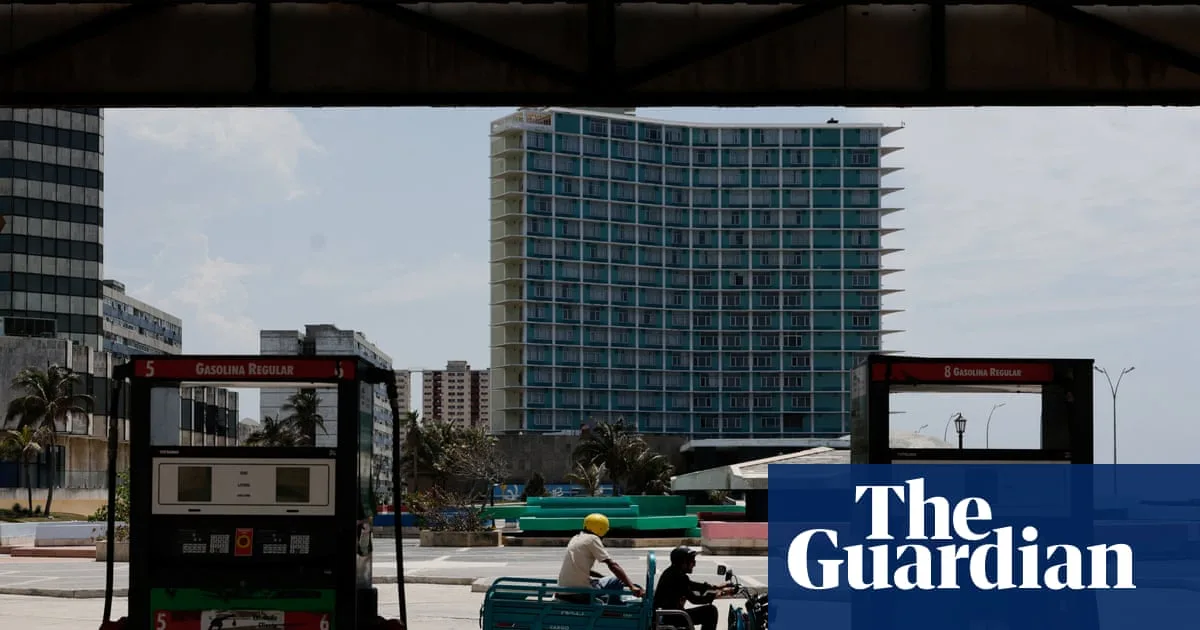
Cuba has completely run out of diesel and fuel oil, Energy Minister Vicente de la O Levy has confirmed, as rolling blackouts lasting up to 22 hours trigger protests across Havana. Residents banged pots and pans, set fire to rubbish piles, and shouted “turn on the lights” late Wednesday, expressing frustration over the worst power cuts in decades.
“We have absolutely no fuel oil and absolutely no diesel,” de la O Levy said on state media, describing the national grid as in a “critical” state with no reserves. The grid now relies solely on domestic crude oil, natural gas, and renewable energy after fuel from a Russian tanker delivered in April was exhausted.
Protests dissipated by 4am Thursday, but much of eastern Cuba remained without power. The energy minister noted that while 1,300 megawatts of solar capacity have been installed in two years, grid instability and a shortage of batteries reduce efficiency and output, leaving homes without power overnight.

De la O Levy said Cuba remains open to fuel purchases from any willing seller, but few are stepping forward. Since US President Donald Trump’s January 2026 executive order threatening tariffs on countries shipping fuel to Cuba, neither Mexico nor Venezuela—once top suppliers—has sent any. Only one Russian tanker, the Anatoly Kolodkin, has delivered crude since December, allowed through the blockade for humanitarian reasons.
The UN last week condemned the blockade as unlawful, stating it obstructs Cuba’s right to development and undermines access to food, education, health, and water. Critics say the deepening crisis has forced school closures, disrupted healthcare, and devastated tourism. Reports indicate US military surveillance flights have increased near Cuba, with plans for possible intervention being drawn up.