






Kuwait's Arrest of Journalist Sparks Free Speech Concerns Amid Iran War
The detention of an internationally acclaimed journalist in Kuwait is intensifying fears over a widespread crackdown on freedom of speech across the Middle East, linked to the ongoing US-Israel war with Iran. The Committee to Protect Journalists has issued a stark warning, highlighting how national security pretexts are being exploited to suppress media freedoms.
Details of the Arrest and Reporting Incident
Ahmed Shihab-Eldin, a US-born Kuwaiti national, was apprehended on March 3 during a short visit to Kuwait. His arrest followed his publication of footage depicting a US Air Force F-15E Strike Eagle crash near al Jahra, west of Kuwait City. On his Substack platform, Shihab-Eldin reported that the pilot and weapons officer had safely ejected and survived, with online videos showing local residents assisting one crew member in a civilian truck.
This incident was part of a friendly fire episode on March 2, where three US aircraft were downed by Kuwaiti air defenses, resulting in no pilot fatalities. Campaigners now worry that Shihab-Eldin may face charges under newly introduced security laws in Kuwait, potentially in a specialized security court.
Broader Context of Media Restrictions in the Gulf
Many Gulf states, anxious about internal unity erosion, are increasingly deploying anti-terrorism legislation to curb publicity surrounding attacks on national infrastructure. The specific social media post leading to Shihab-Eldin's detention remains unclear, though he had shared other footage of damage in the Gulf and Iran.
Shihab-Eldin boasts a distinguished career, having worked for PBS, HuffPost, and Al Jazeera English, earning accolades such as an Amnesty International award and a British Journalism prize. He also served as an adjunct lecturer at Columbia University's Graduate School of Journalism. A vocal advocate for Palestinians in Gaza and a critic of the Israeli government, he has argued that Israel is "pushing harder than ever for a wider war to distract from its genocide and reshaping of the regional balance of power." Notably, Kuwaiti policy also opposes the Israeli war in Gaza.
Reactions from Human Rights Organizations
Sara Qudah, the CPJ's Middle East regional director, stated, "We are witnessing escalating censorship of journalists and news outlets globally in relation to the Iran war, including in the Gulf. National security is being used as a pretext to crack down on freedom of speech, and Shihab-Eldin's detention epitomizes this. He must be released immediately."
Ashish Prashar, a former adviser to the Middle East peace envoy, added, "Arbitrarily imprisoning a journalist and labeling their work as terrorism or a threat to national security is a grave misstep. The US State Department and UK Foreign Office must demand the release of all media workers from their Gulf allies. Failure to do so would constitute an abandonment of ethical obligations and an endorsement of authoritarian practices."
The Gulf Centre for Human Rights reported dozens of arbitrary arrests in Kuwait as part of a systematic repression pattern, transforming the nation from a relatively free state into a police state that suppresses dissent and uses citizenship as a punitive tool against opponents.
Legal and Constitutional Implications
Kuwait has enacted two new laws, one defining terrorism as spreading terror by endangering societal safety and security. Article 36 of the Kuwaiti constitution guarantees freedom of opinion and scientific research, allowing individuals to express views orally, in writing, or otherwise. However, a proposed law imposes severe fines and sentences for publishing false statements about military entities to undermine confidence or morale.
In late 2015, Amnesty International warned that Kuwait risked deeper repression, with estimates suggesting 20-35% of its population is Shia. The country has leveraged citizenship laws to expel alleged dissidents or terror cells, partly to counter Iranian accusations of allowing US bases for attacks on Iran.
Regional Tensions and Recent Events
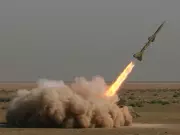
On March 9, Emir Sheikh Meshal al-Ahmad al-Jaber Al Sabah asserted that Kuwait has not permitted its territory to be used for military activities against Iran. Despite this, videos of Himars missiles allegedly fired from Kuwait into Iran have circulated, including on reputable outlets like France 24.
Iran targeted Kuwaiti assets multiple times in March, striking the crude oil tanker Al-Salmi on March 30, a power and water desalination plant, the main port of Shuwaikh on March 27, and fuel storage tanks at Kuwait International Airport on March 25. Ali Al-Salem airbase and Camp Buehring also faced heavy Iranian strikes. Kuwait, reliant on seawater desalination for 90% of its potable water due to scarce freshwater sources, is particularly vulnerable to such attacks.
Earlier this month, Kuwait revoked citizenship from 2,182 individuals and their families, followed by a decree reforming nationality laws to restrict citizenship claims. Additionally, visas for Iraqi citizens were withdrawn after protests at the Kuwait consulate in Basra on April 7, following a missile strike of unknown origin that killed three people.