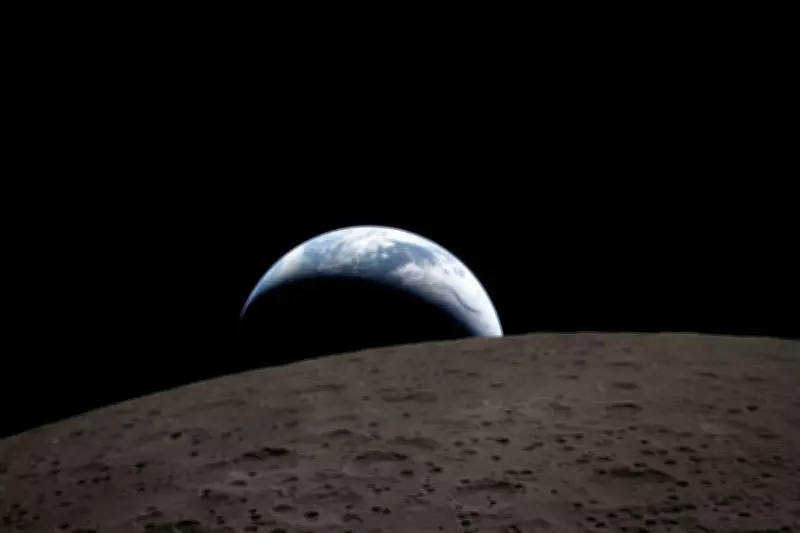
Artemis II Astronauts Share Profound 'Otherworldly' Experience from Historic Moon Mission
The four astronauts of NASA's Artemis II mission have described their "otherworldly" journey to the far side of the Moon, marking humanity's deepest voyage into space. During their first press conference since returning to Earth on Friday, 16 April 2026, the crew recounted overwhelming emotions and unique phenomena encountered during the nine-day record-breaking expedition.
Unprecedented Communication Blackout and Solar Eclipse
Mission commander Reid Wiseman revealed a particularly profound moment when the crew experienced a solar eclipse visible only from their spacecraft as the Moon passed between Orion and the Sun. "It's very hard to fully grasp what we just went through," Wiseman stated. "When the Sun eclipsed behind the Moon... I turned to [Artemis II pilot] Victor and said, 'I don't think humanity has evolved to the point of being able to comprehend what we're looking at right now.'"
The commander added: "It was otherworldly, and it was amazing." This extraordinary visual spectacle occurred during a critical phase of the mission when the spacecraft traveled behind the Moon, resulting in a 40-minute communication blackout with Earth—the longest period any human has been out of contact while venturing further from our planet than ever before.

Historic Mission Details and Future Ambitions
Artemis II represents the first crewed mission to the Moon in over five decades, achieving the distinction of carrying humans farther from Earth than any previous expedition. Despite several program delays—including the originally scheduled December 2025 crewed lunar surface mission—the Artemis II crew expressed confidence in NASA's ambitious timeline.
Mission specialist Christina Koch reflected: "This mission taught me that the unknown is way scarier than the known. Every single time we accomplished a mission test objective, we all looked at each other and we're like, 'that actually went pretty well.' We know how to put in the work to accomplish a goal when the time comes."
NASA's Forward-Looking Artemis Program
The United States space agency maintains ambitious plans for the Artemis program, with Artemis III scheduled to practice docking procedures between the Orion spacecraft and lunar lander in Earth's orbit. Preparations are already advancing, as demonstrated by NASA rolling the launch tower back to the Vehicle Assembly Building at Florida's Kennedy Space Center on Thursday to configure it for next year's launch.
Looking further ahead, NASA aims to land astronauts on the lunar surface during the Artemis IV mission in 2028, with eventual goals of establishing a permanently crewed base on the Moon. The Artemis II mission has provided crucial data and experience that will inform these forthcoming endeavors, demonstrating both the challenges and extraordinary possibilities of human space exploration beyond Earth's immediate vicinity.