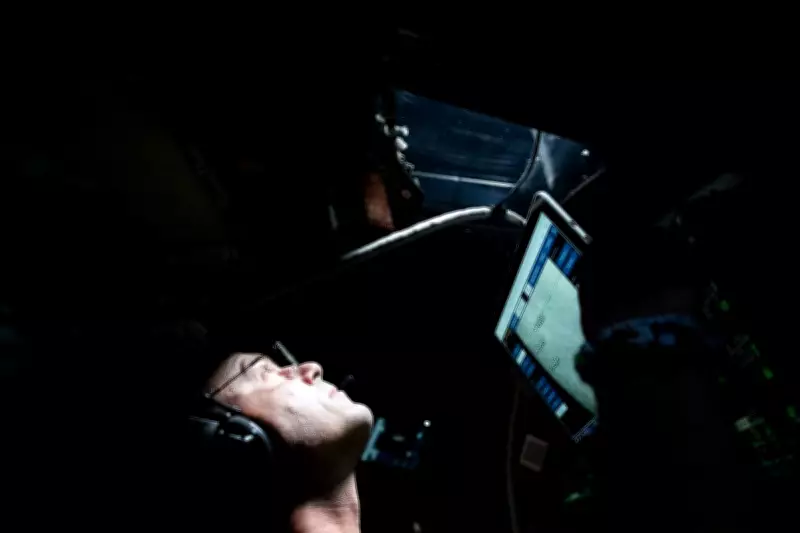
The Artemis II mission has reached a critical milestone as its crew of astronauts has successfully crossed the halfway mark between the Moon and Earth. Their Orion capsule is now on a precise trajectory for a scheduled splashdown in the Pacific Ocean today at 8.07pm Eastern Time.
Heat Shield Concerns and NASA's Confidence
A primary focus for mission controllers is the capsule's heat shield, which experienced cracking during the uncrewed Artemis I test flight. NASA officials have publicly stated their "high confidence" in the shield's performance for this crewed return. To further mitigate risks, engineers have modified the spacecraft's re-entry path, aiming to reduce thermal and structural stresses during the descent.
The Fiery Descent and Recovery Operations
The final phase of the journey will involve a dramatic, high-speed re-entry into Earth's atmosphere. The Orion capsule is expected to endure extreme temperatures as it travels at velocities approaching 24,000 miles per hour. This fiery descent is projected to last approximately 15 minutes, a period mission planners refer to as the "risky 13 minutes" of peak heating and deceleration.

Upon splashdown off the coast of San Diego, a dedicated recovery team will swiftly secure the capsule. The astronauts will then undergo immediate medical evaluations on board a recovery vessel to assess their health after the long-duration spaceflight. Following these initial checks, the crew will be transported by aircraft to NASA's Johnson Space Center in Houston for further debriefing and rehabilitation.
Cultural Touchstones and Mission Significance
Adding a human element to the technical narrative, the crew recently awoke to the song "Lonesome Drifter," a selection that underscores the solitary nature of their deep-space journey. This mission represents a pivotal step in NASA's Artemis program, which aims to establish a sustainable human presence on the Moon and serve as a proving ground for future missions to Mars.
The successful return of the Artemis II crew will validate key technologies and operational procedures, including life support systems and deep-space navigation, essential for the more ambitious Artemis III lunar landing mission planned for later this decade.