Artemis II Concludes Historic Lunar Mission with Pacific Splashdown
The grand finale of NASA's Artemis II mission has arrived, with the spacecraft's four astronauts successfully splashing down in the Pacific Ocean on Friday. This event caps humanity's first crewed voyage to the moon in more than half a century, marking a triumphant return to lunar exploration after decades of absence.
Tense Reentry and Dramatic Return
As the miles between Earth and the returning astronauts rapidly decreased, tension mounted in Mission Control. All attention focused on the capsule's critical heat shield, which had to withstand temperatures reaching thousands of degrees during atmospheric reentry. During the spacecraft's only previous test flight in 2022—conducted without crew—the shield's exterior returned charred and pockmarked, resembling the lunar surface itself.
Commander Reid Wiseman, pilot Victor Glover, mission specialist Christina Koch, and Canadian astronaut Jeremy Hansen reentered Earth's atmosphere traveling at Mach 32, equivalent to thirty-two times the speed of sound. This blistering velocity hadn't been witnessed since NASA's Apollo missions of the 1960s and 1970s. The Orion capsule, named Integrity, operated completely autonomously throughout the descent, with the crew prepared to take manual control only in emergency situations.

Record-Breaking Journey and Lunar Exploration
Launched from Florida on April 1, the Artemis II mission achieved numerous milestones during its nearly ten-day flight. While the spacecraft neither landed on nor orbited the moon, it surpassed Apollo 13's distance record, carrying Wiseman and his crewmates to 252,756 miles from Earth—the farthest any humans have ever traveled from our planet.
During their record-breaking lunar flyby, the astronauts documented previously unseen views of the moon's far side with their naked eyes and experienced a total solar eclipse, an extraordinary cosmic event made possible by their carefully timed launch date. Pilot Victor Glover described the eclipse as having "just blew all of us away," capturing the crew's sense of wonder throughout the mission.
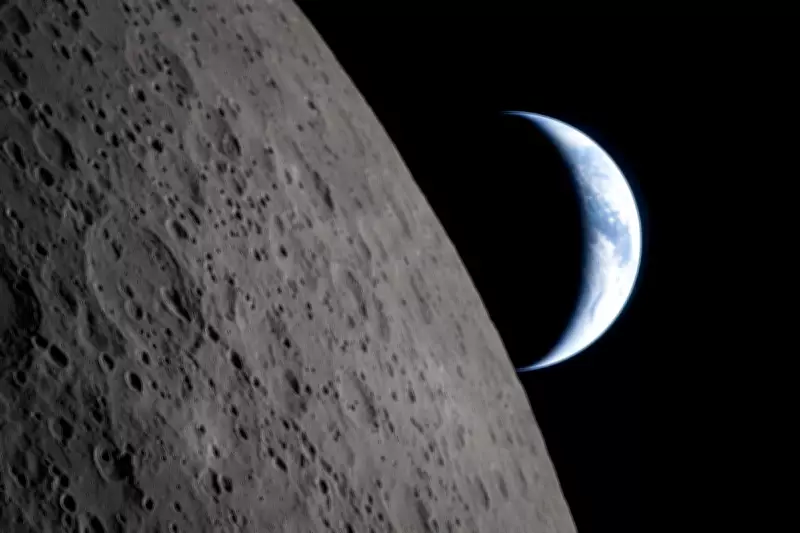
In one particularly emotional moment, the tearful astronauts requested permission to name two lunar craters—one after their spacecraft and another honoring Commander Wiseman's late wife, Carroll. Their breathtaking photographs of both Earth and the moon, including an Earthset image showing our blue planet descending behind the gray lunar horizon, evoked memories of Apollo 8's famous Earthrise photograph from 1968.
Technical Challenges and Future Missions
Despite its scientific achievements, the Artemis II flight encountered several technical issues. Both the capsule's drinking water system and propellant systems experienced valve problems, while toilet malfunctions forced the crew to rely on traditional bags and funnels for most of the journey.
The astronauts maintained perspective about these inconveniences. Christina Koch remarked, "We can't explore deeper unless we are doing a few things that are inconvenient, unless we're making a few sacrifices, unless we're taking a few risks, and those things are all worth it." Canadian astronaut Jeremy Hansen added that while extensive testing occurs on Earth, "your final test is when you get this hardware to space and it's a doozy."
Artemis II serves as a crucial test flight for NASA's revitalized lunar program. Next year's Artemis III mission will practice docking procedures in Earth orbit, while Artemis IV aims to land a two-person crew near the moon's south pole in 2028. Commander Wiseman emphasized that his crew's primary allegiance remains with these future Artemis missions, though he expressed hope that their journey might inspire global appreciation for "this beautiful planet and a very special place in our universe."
Global Attention and Historical Significance
The mission captured worldwide attention, drawing recognition from numerous prominent figures including former President Donald Trump, Canadian Prime Minister Mark Carney, Britain's King Charles III, and entertainment celebrities such as Ryan Gosling, Scarlett Johansson, and William Shatner. Lead flight director Jeff Radigan reflected on the eve of splashdown that this mission represents "the first of many trips" to the moon, with much more knowledge awaiting discovery.

The successful Pacific splashdown concludes NASA's first crewed lunar mission since Apollo 17 in 1972, reestablishing humanity's presence in deep space and paving the way for sustained lunar exploration in the coming years.