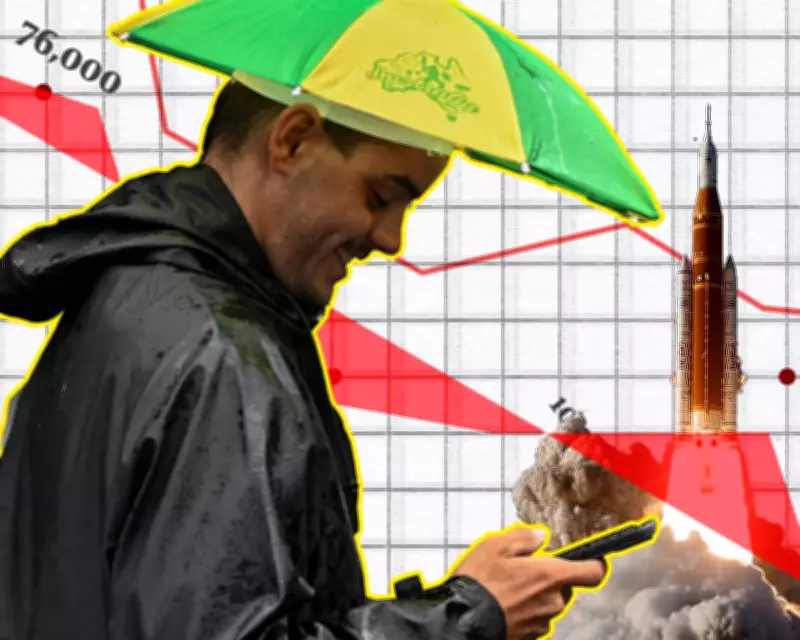
Artemis II Launch and Melbourne's Wet Weather Highlight The Crunch Newsletter
This week's edition of The Crunch newsletter brings a diverse mix of stories, from the highly anticipated Artemis II space mission to the unpredictable weather patterns in Melbourne. While the ongoing space voyage could easily dominate the headlines, the newsletter also delves into critical global issues, including visualisations of space debris, the fuel crisis in Australia, and detailed maps of the Hormuz Strait.
Is Space Still Empty with 32,000 Objects Orbiting Earth?
To start with a story from beyond our atmosphere, UK colleagues have created a visualisation of the staggering 32,000 objects currently orbiting Earth. This number has grown exponentially from about 7,000 in the 1970s and 20,000 in the 1990s, raising concerns about satellite-smashing chain reactions. An animated map makes this growth even more alarming, highlighting the rapid accumulation of space debris that poses risks to future missions.
Tracking Australia's Fuel Crisis with Animated Maps
Back in Australia, Andy Ball and the team have been monitoring the fuel crisis, using animated maps to show hundreds of service stations experiencing outages of one or more fuel types. This page is regularly updated with the latest fuel prices across major cities, outages, shipments, and national fuel reserves. Additionally, Julian Fell and Casey Briggs at the ABC are analysing similar data to estimate fuel prices by capital city and regional classification, noting how price variations have reduced as margins tighten.

Four Key Charts from the Fortnight
1. US Trade Deficits Post-Trump Tariffs: Reuters has developed an interactive feature asking users to guess what happened since Trump's tariff "liberation day" last year, using draw-and-drag charts to explore changes in US trade deficits.
2. Melbourne's Seven Seasons: Contrary to the common belief of two seasons—cold and colder—software developer Max Craigie's app suggests Melbourne actually has seven seasons. This analysis uses cosine similarity to match season names with weather data, aligning with the Wurundjeri and other Kulin Nation peoples' traditional recognition of seven seasons based on cultural practices and ecological knowledge.
3. Detailed Map of the Hormuz Strait: The New York Times has produced an incredibly detailed map of the Hormuz Strait, helping readers understand the scale of the Persian Gulf and locate key sites like Kharg and Larak. This complements other maps, such as those showing the scale of conflicts in the region.
4. Fertiliser Blockade Visual Guide: UK colleagues created a visual guide to the fertiliser blockade, including a map that stacks well on mobile devices and a Sankey chart illustrating global dependence on Gulf fertiliser imports, highlighting the "double shock" impact.
Bookmarks and Off the Charts Highlights
The newsletter includes bookmarks on topics like data visualisation with textiles, early flower emergence after a record-warm March, and stories on social trends and justice issues. For space enthusiasts, an ABC interactive visualising the Artemis II journey is highly recommended, along with a New York Times story featuring animated timelines and graphics of the spacecraft. Bloomberg and Die Zeit also offer engaging Artemis II interactives with animations and 3D elements.
Readers are encouraged to sign up for The Crunch to receive these insights fortnightly, share the newsletter with others, and contact the team with chart tips or technical issues. This edition underscores the blend of space exploration, environmental analysis, and global geopolitics that defines The Crunch's comprehensive coverage.