Artemis II Crew Celebrates Triumphant Lunar Return Amid Budget Uncertainty
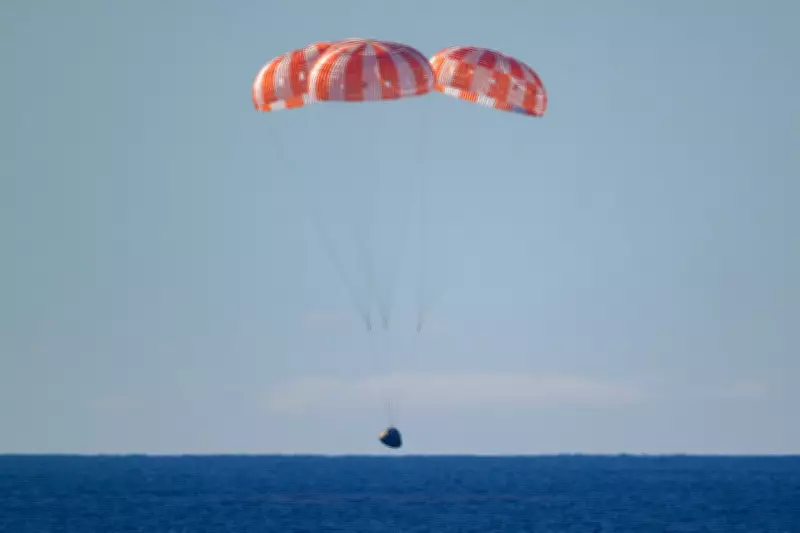
The astronauts of NASA's Artemis II mission have returned safely to Earth after a historic lunar flyby, marking the first human journey to the moon and back since 1972. The Orion capsule, named Integrity, splashed down in the Pacific Ocean on 10 April 2026, following a flawless 10-day odyssey that broke distance records and reignited America's deep space ambitions.
Poetic Ambassadors for Humanity
NASA Administrator Jared Isaacman hailed the crew as "almost poets" and "ambassadors for humanity" for their inspiring words during the mission. The team, consisting of NASA astronauts Reid Wiseman, Victor Glover, Christina Koch, and Canadian Space Agency astronaut Jeremy Hansen, is set to share their experiences in a forthcoming press conference. Their successful return represents NASA's most significant achievement in over five decades, solidifying the United States' lead in the new space race with China for lunar exploration and habitat construction.
Jubilation at Johnson Space Center
At the Johnson Space Center in Houston, celebrations erupted as the capsule made a textbook splashdown. NASA TV commentator Derrol Nail noted, "The mission is over but the melody lingers on." This milestone not only bridges a 54-year gap but also primes the agency for the planned Artemis III lunar landing test next year and a targeted 2028 moon landing with a permanent base.

Shadow of Proposed Budget Cuts
However, the jubilant mood is overshadowed by proposed budget cuts from the Trump administration. Even as the Artemis II mission ascended, Donald Trump announced intentions to slash NASA's budget by 23%, including a drastic 46% cut to space science initiatives. These "extinction-level" reductions, described by critics as discordant with NASA's achievements, threaten to dismantle the agency's capabilities despite its recent success.
Administrator's Support and Criticism
Isaacman has publicly supported the White House's plan to strip $6 billion in funding, asserting that current levels are sufficient to meet mission priorities. Yet, Casey Dreier, chief of space policy at the Planetary Society, argues this stance is contradictory. He points out that the budget proposal includes errors, such as requesting funds for already-canceled programs like the Mars sample return, and appears sloppy, with copy-paste elements from previous rejected proposals.
Bipartisan Rejection and Future Challenges
Dreier highlights that Congress rejected a similar budget proposal in January 2026 through rare bipartisanship, and it is likely to do so again for 2027. He criticizes the timing of the announcement, calling it an insult to the Artemis II team and a mar on their historic achievement. Despite this, NASA remains focused on the future, with Associate Administrator Amit Kshatriya emphasizing that the path to the lunar surface is open, but the work ahead is greater than what has been accomplished.
Looking Ahead to Artemis III and Beyond
Isaacman, reflecting from the recovery ship USS John P Murtha, expressed awe at the mission's success and optimism for frequent lunar missions leading to the 2028 landing. Dreier acknowledges the importance of Artemis II in proving hardware for deep space travel but cautions against underestimating the challenges ahead. The triumph of Artemis II is a pivotal moment, yet it is clouded by political and budgetary uncertainties that could hinder America's grand ambitions in space.