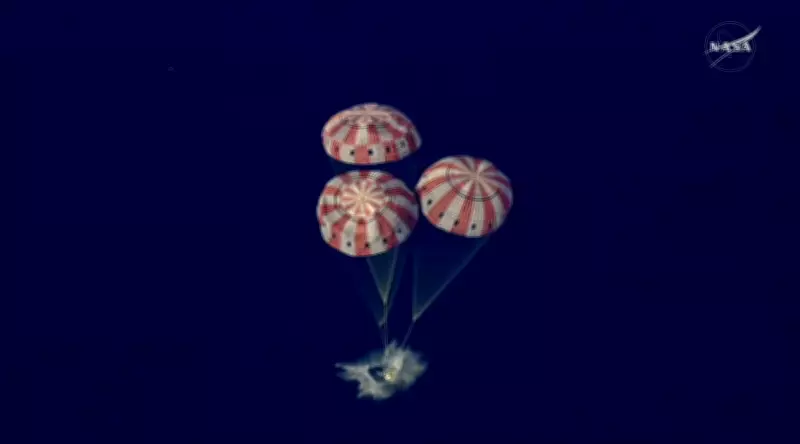
NASA's Artemis II mission has achieved a monumental milestone by successfully returning to Earth after a historic flyby of the moon, marking a pivotal step in humanity's renewed quest for lunar exploration and beyond. The spacecraft, carrying a crew of astronauts, splashed down in the Pacific Ocean as planned, concluding a journey that tested new technologies and operational strategies essential for future deep space missions.
Mission Overview and Objectives
The Artemis II mission was designed as a precursor to Artemis III, which aims to land humans on the lunar surface for the first time since the Apollo era. During its flight, the spacecraft performed a close lunar flyby, allowing the crew to conduct scientific observations and system checks in the harsh environment of space. This mission focused on validating the Orion spacecraft's life support systems, navigation capabilities, and communication links, all critical for ensuring astronaut safety on longer voyages.
Key Achievements and Innovations
One of the standout successes of Artemis II was the demonstration of advanced propulsion and re-entry techniques. The spacecraft utilized a new heat shield technology to withstand the intense temperatures during Earth re-entry, a crucial development for future missions to Mars and other destinations. Additionally, the mission collected valuable data on radiation exposure and microgravity effects, which will inform health protocols for astronauts on extended spaceflights.

The crew also tested innovative tools for in-space repairs and conducted experiments aimed at understanding lunar geology and potential resource utilization. These efforts underscore NASA's commitment to sustainable exploration, with goals of establishing a permanent human presence on the moon and using it as a stepping stone for missions deeper into the solar system.
Implications for Future Space Exploration
The safe return of Artemis II boosts confidence in NASA's Artemis program, which seeks to land the first woman and the next man on the moon by the late 2020s. This mission has provided critical insights that will refine plans for Artemis III, including landing site selection and habitat design. Moreover, it strengthens international partnerships, as agencies from Europe, Canada, and Japan contributed components and expertise to the mission.
Looking ahead, the success of Artemis II sets the stage for more ambitious endeavors, such as the construction of the Lunar Gateway—a space station orbiting the moon—and eventual crewed missions to Mars. By proving the viability of new technologies and operational frameworks, this mission represents a significant leap forward in our ability to explore and inhabit other worlds.
Challenges and Lessons Learned
Despite its triumphs, Artemis II faced challenges, including minor technical glitches and communication delays that required real-time problem-solving by ground control. These issues highlighted the importance of robust contingency planning and have led to updates in mission protocols. The experience gained will enhance safety and efficiency for future Artemis missions, ensuring that humanity's return to the moon is both successful and sustainable.
In summary, the Artemis II mission has not only reignited public interest in space exploration but also demonstrated NASA's capability to push the boundaries of human achievement. As the agency prepares for the next phases of the Artemis program, the lessons from this mission will be invaluable in shaping a new era of lunar and interplanetary discovery.