China Unveils Advanced Wheeled Humanoid Robot for Lunar Base Construction
China has introduced a groundbreaking wheeled humanoid robot, engineered to play a pivotal role in building a lunar research station by the year 2035. This innovative machine is specifically designed to undertake a variety of critical tasks on the Moon's surface, including assembling infrastructure, transporting essential materials, collecting scientific samples, and maintaining equipment, all before human astronauts set foot there.
Design and Development by Beijing Institute
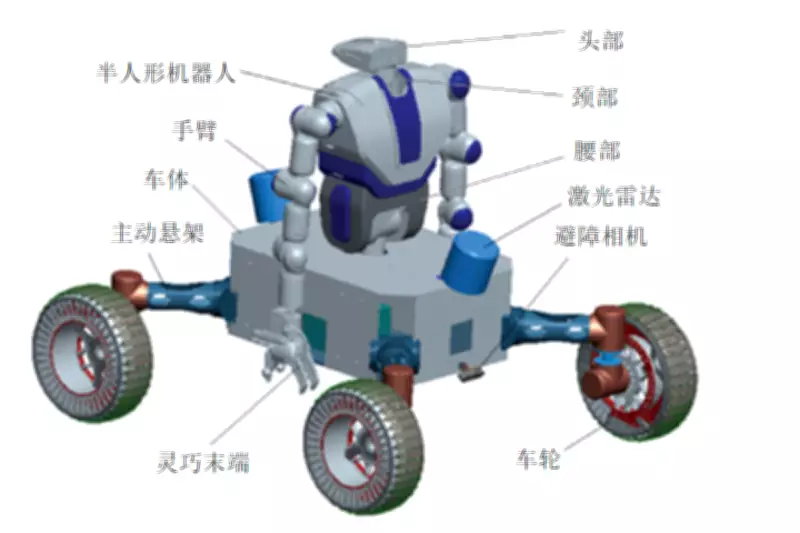
Developed by the Beijing Institute of Spacecraft System Engineering, the robot features a unique combination of a humanoid upper body for dexterous manipulation and a wheeled base. This design was selected for its superior stability, enhanced speed, and greater energy efficiency in the challenging lunar environment, which is characterized by low gravity and rough terrain.
Advanced Technical Capabilities
The robot boasts several advanced capabilities that make it well-suited for lunar operations:

- A 180-degree rotating waist for increased flexibility and range of motion.
- A four-degree-of-freedom hand capable of performing precise and delicate tasks.
- Stereo cameras that provide accurate depth perception for navigation and object manipulation.
- Seven-degree-of-freedom arms that allow for complex movements and handling of tools.
Why a Wheeled Design Was Chosen
Scientists opted for a wheeled design over traditional bipedal walking robots due to several key factors. Bipedal designs often face issues such as mechanical complexity, a higher risk of falling on uneven surfaces, and significant energy consumption. In contrast, the wheeled robot offers a more practical and reliable solution for long-term lunar operations, ensuring sustained performance and reduced maintenance needs.
This development marks a significant step forward in space exploration technology, as China aims to establish a permanent presence on the Moon. The robot's ability to perform autonomous tasks will help pave the way for future human missions, making lunar base construction more feasible and efficient.