NASA Reassures Public Over Artemis II Heat Shield After Social Media Alarm
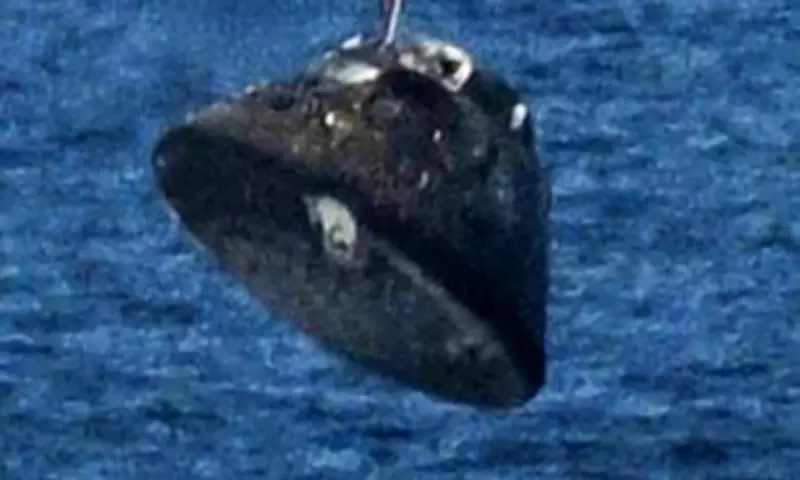
As the Artemis II capsule made its fiery return to Earth, sharp-eyed observers on social media raised alarms over what appeared to be a significant patch of damaged or missing material on the Orion crew capsule's heat shield. This concern emerged amidst pre-existing worries from experts about the integrity of the three-inch-thick insulating layer, which had shown issues during the uncrewed Artemis I test.
On platform X, one user questioned, 'It appears Orion was missing a fairly large chunk of its heat shield. Am I seeing things?' prompting a wave of speculation. However, NASA has since stepped in to clarify the situation, asserting that there is no cause for concern.
NASA's Explanation of the Discolouration
NASA Administrator Jared Isaacman addressed the public via X, stating, 'As you would expect, engineers were eager to inspect the heat shield, starting with diver imagery shortly after splashdown and continuing with the review aboard the ship.' He confirmed that no unexpected conditions were observed and suggested that upcoming images would highlight the improved performance compared to Artemis I.

The Orion capsule utilises an ablative heat shield composed of Avcoat, designed to burn away gradually during re-entry to dissipate heat, similar to a car's crumple zone. During Artemis I, this material cracked more rapidly than anticipated, with large sections breaking off. In response, NASA adjusted the re-entry trajectory for Artemis II to a steeper dive, but concerns persisted about potential insufficient testing and risks to crew safety from high temperatures.
Social Media Speculation and Expert Insights
When images showed a discoloured area on the heat shield, space enthusiasts quickly theorised it might be a broken-off piece. One commenter speculated, 'It is the ablative cover for the edge. It is designed to peel away,' while another added, 'The heat shield breaks off to take the heat with it, that's what it was designed to do and that's what it did. It worked perfectly.'
Isaacman intervened to dispel these rumours, explaining, 'I am hesitant to get ahead of a proper data review, but I understand the space community’s curiosity, especially when imagery can give the impression of a problem.' He clarified that the discolouration was not liberated material but rather a result of expected behaviour in the compression pad area, consistent with arc jet testing.
Technical Details and Future Steps
The heat shield features holes containing explosive bolts that connect Orion to the European Service Module. During re-entry, the compression pad separates, exposing titanium bolts that can erode from intense heat, potentially leaving behind white titanium oxide—this could account for the observed discolouration. Freelance photographer Matt Hartman, present during recovery, supported this, noting on X, 'The discoloration was exactly that ....discoloration....... no holes.'
Isaacman emphasised that a comprehensive data review across all systems, including the thermal protection system, will be conducted, with results made publicly available. However, he did not specify a timeline for the release of images or the report. The Daily Mail has reached out to NASA for further comment.
Artemis II Mission Overview
Key facts about the Artemis II mission:
- Launch date: April 1
- Mission objective: Complete a lunar flyby, testing systems for future lunar landings
- Total distance: 620,000 miles (one million km)
- Mission duration: 10 days
- Estimated total cost: $44 billion (£32.5 billion)
- Crew: Commander Reid Wiseman, Pilot Victor Glover, Mission Specialist Christina Koch, Mission Specialist Jeremy Hansen
Mission stages include launch from Kennedy Space Centre, orbital manoeuvres, a lunar flyby at up to 5,523 miles altitude, and splashdown in the Pacific Ocean. This mission marks a critical step in NASA's plans for sustained lunar exploration and eventual Mars missions.