NASA's Artemis II Mission Blasts Off with Advanced $30 Million Toilet System
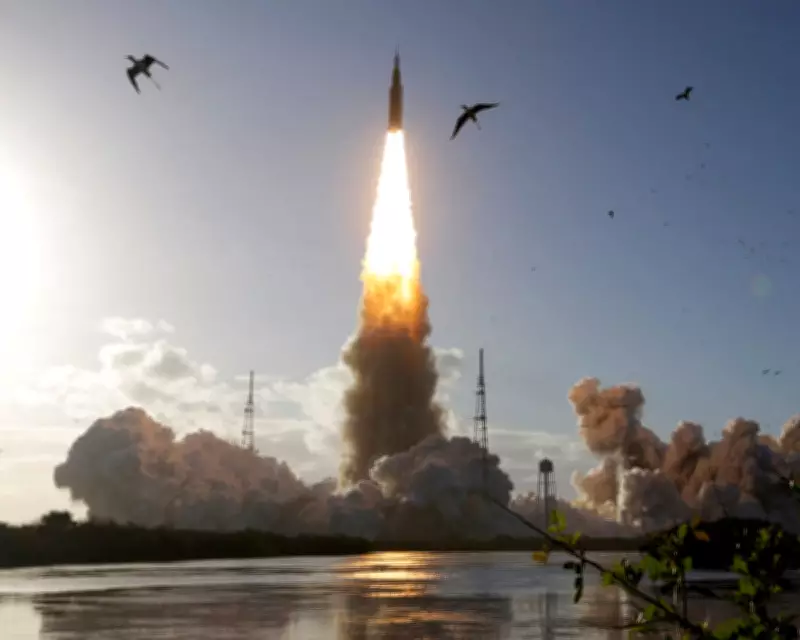
NASA's historic Artemis II mission launched on Wednesday, featuring a cutting-edge $30 million toilet designed to address long-standing complaints from astronauts about previous space facilities. The mission experienced a brief setback when a fault light indicated the toilet was out of order, but mission control quickly resolved the issue, confirming, "Happy to report that toilet is go for use."
Resolving Initial Glitches for Astronaut Comfort
The Universal Waste Management System (UWMS), valued at $30 million (£22.6 million), represents a significant leap forward in deep space toilet technology. Developed over years, it aims to improve upon primitive setups used in earlier missions, such as the Apollo era, where astronauts dealt with leak-prone condom-like devices and bags taped to their bodies for waste collection.
Mission control advised the crew, "We do recommend letting the system get to operating speed before donating fluid, and then letting it run a little bit after donation." This guidance ensures optimal performance of the new system, which includes a private toilet cubicle—a first for a space shuttle—accessed through a door on the floor near the spacecraft hatch.

Enhanced Design for Safety and Privacy
The upgraded toilet features handrails and foot tethers to secure astronauts during use, addressing microgravity challenges. Jeremy Hansen, a mission specialist from the Canadian Space Agency, highlighted the importance of this addition, stating, "We're pretty fortunate as a crew to get a toilet with a door on this tiny spacecraft. The one place during the mission where we can go and actually feel like we're alone for a moment."
Equipped with a funnel and hose for urine and a small seat, the system uses suction to manage solid waste, which is collected in a bag and compressed into a canister. Due to the noisy suction, the cubicle is insulated, and astronauts must wear ear protection while inside.
Sustainability and Long-Term Space Exploration Goals
Beyond comfort, the UWMS supports NASA's Artemis programme objectives of establishing a permanent presence in space. Sustainable waste management is critical to prevent health risks and avoid contaminating space with Earth microbes. On shorter missions like Artemis II, urine is vented daily, and faecal waste is stored for disposal upon return to Earth.
David Munns, professor of the history of science and technology at the City University of New York, emphasized, "Actually thinking about not only toilets but the entire life support systems is one of the foundations of long-term living in space. Having the ability to deal with waste is mission-critical."
This advancement marks a pivotal step in deep space exploration, ensuring astronaut well-being and environmental sustainability for future missions.