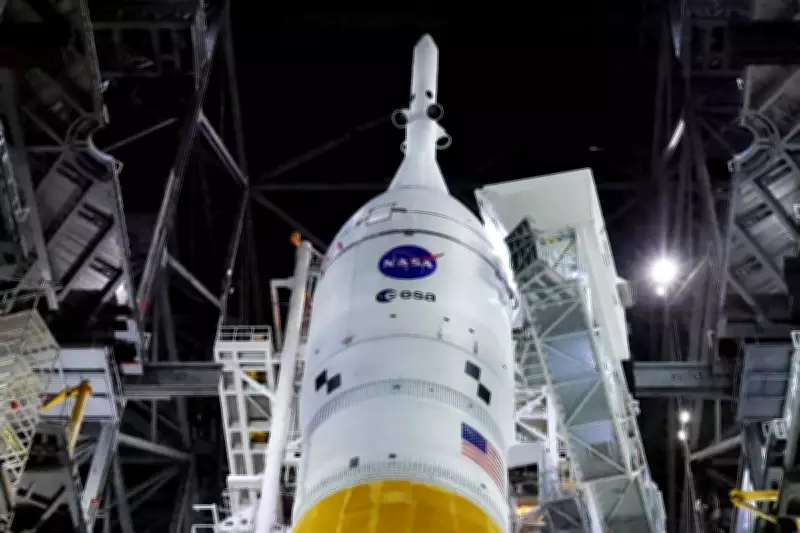
NASA has, for the second time this year, moved its massive moon rocket from the hangar to the launchpad, aiming to send four astronauts on a lunar fly-around mission next month. If recent repairs prove successful and all systems are go, the Space Launch System could take off from Florida's Kennedy Space Center as early as April 1.
Artemis II Crew Enters Quarantine as Rocket Makes Slow Journey
The Artemis II crew, consisting of three Americans and one Canadian, began their quarantine period in Houston this week. Meanwhile, the 98-meter (322-foot) rocket embarked on its slow, 6.4-kilometer (4-mile) journey overnight, carried atop a massive crawler vehicle that has been in use since the Apollo era of the 1960s. This 12-hour trek was delayed for several hours due to high winds, adding to the mission's challenges.
Mission Delays Due to Technical Issues
The mission was originally scheduled for completion by now, but hydrogen fuel leaks and clogged helium lines forced a two-month delay. While technicians managed to plug the leaks at the launchpad, the helium issue required repairs in the Vehicle Assembly Building, prompting NASA to roll the rocket back at the end of February.

NASA's new administrator, Jared Isaacman, recently announced a significant overhaul of the Artemis program. Dissatisfied with the slow pace and lengthy gaps between lunar missions, he added an extra practice flight in Earth orbit for next year. This new mission is now designated Artemis III, with the moon landing by two astronauts shifted to Artemis IV. Isaacman is targeting one, and possibly two, lunar landings in 2028.
Historical Context and Future Goals
The last time NASA sent astronauts to the moon was during the Apollo 17 mission in 1972. The Artemis program aims to achieve a two-person landing by 2028. However, NASA's Office of Inspector General has warned in an audit that the space agency needs to develop a rescue plan for its lunar crews. Landing near the moon's south pole will be riskier than the Apollo landings near the equator due to the rough polar terrain.
Contracted by NASA to provide the moon landers for astronauts, Elon Musk's SpaceX and Jeff Bezos' Blue Origin have accelerated their work to meet the new 2028 target date. The Artemis II crew will orbit the moon in their capsule before returning directly to Earth, marking a critical step in NASA's renewed lunar exploration efforts.