Cosmic Conundrum: Universe Expanding Too Fast, Defying Scientific Models
An international team of astronomers has issued a startling warning: the universe is expanding at a rate that is too fast, and scientists are left baffled as to why. This revelation stems from some of the most precise measurements ever conducted on cosmic growth, which instead of providing clarity, have deepened the mystery surrounding our understanding of the cosmos.
Precise Measurements Reveal Alarming Discrepancy
For their groundbreaking study, researchers combined multiple methods to measure universe expansion, aiming for an accurate assessment. They discovered that the universe is growing at approximately 73.5 kilometres per second per megaparsec, a unit of distance equivalent to 3.26 million light years. This rate is significantly faster than current cosmological models predict, marking what the scientists describe as a significant shift in perspective.
Published in the journal Astronomy & Astrophysics, the findings strengthen the case for new physics or a deeper reassessment of the early universe. Traditionally, scientists have relied on two primary methods to gauge cosmic expansion: one examines nearby stars and galaxies to observe their movement away from Earth, while the other analyzes the early universe to forecast today's expansion rate. These approaches are expected to align, but they consistently do not.

The Hubble Tension: A Persistent Puzzle
Early universe predictions suggest an expansion rate of about 67 or 68 kilometres per second per megaparsec, whereas measurements from nearby stars indicate a much faster pace of around 73. Although the numerical difference might seem minor, it far exceeds statistical uncertainty, a disagreement known as the Hubble tension. This discrepancy has emerged in numerous studies, prompting scientists to seek more accurate answers.
To address this, the team developed a model called The Local Distance Network, integrating various measurement techniques. This included observations of red giant stars with known brightness, exploding stars, and diverse galaxy types. With very high precision, they confirmed the expansion rate of about 73.5 kilometres per second per megaparsec, a figure that remained consistent even when individual methods were excluded, ruling out obvious errors.
Implications for Cosmology and Future Research
The authors emphasized that this work effectively dismisses explanations relying on a single overlooked error in local distance measurements. If the tension is real, as mounting evidence suggests, it may point to new physics beyond the standard cosmological model. This discovery has significant implications, indicating that standard models based on early universe measurements might be incomplete.
Potential factors could include an incomplete understanding of dark energy's influence, the existence of new particles, or alterations to gravity. The researchers noted that the Hubble tension might not stem from measurement error but rather evidence that the current model of the universe is missing a key component. With next-generation observatories poised to deliver even more precise measurements, astronomers aim to determine whether this discrepancy will be resolved or continue to hint at new physics.
Background on Dark Energy and Cosmic Theories
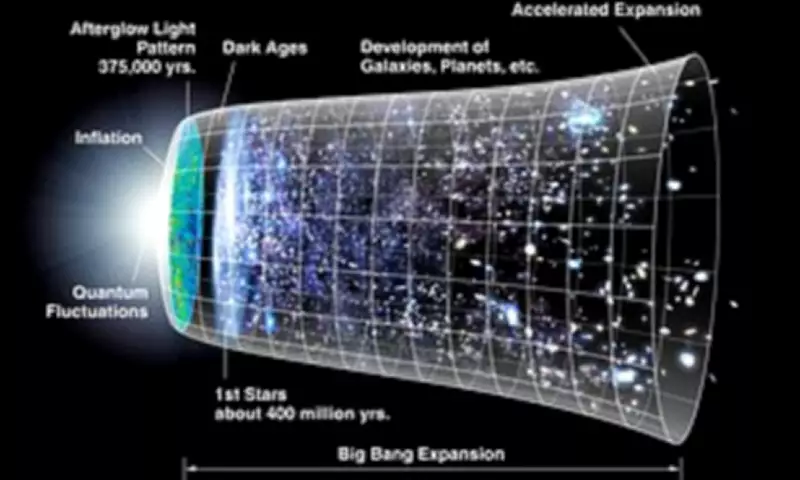
In the standard model of cosmology, the universe is propelled apart by a constant force known as dark energy. Dark energy is a term used by physicists to describe a mysterious entity causing unusual cosmic phenomena. While gravity pulls matter together, observations from the Hubble Space Telescope in 1998 revealed that the universe's expansion is accelerating, contrary to expectations of slowing due to gravity.
As Dr. Kathy Romer of the Dark Energy Survey explained, The universe is not only expanding, but it is expanding faster and faster as time goes by. This acceleration challenges previous assumptions and underscores the complexity of cosmic dynamics. Additionally, while the universe began with the Big Bang, some theories suggest it might end with a Big Crunch, where dark energy could be overwhelmed by gravity, leading to a collapse into a hot, dense inferno.

The team of 40 researchers included experts from NSF NOIRLab and the Space Telescope Science Institute, highlighting the collaborative effort behind these findings. As the scientific community grapples with these revelations, the quest to unravel the mysteries of the universe continues, driven by the promise of new discoveries and a deeper understanding of our cosmic reality.