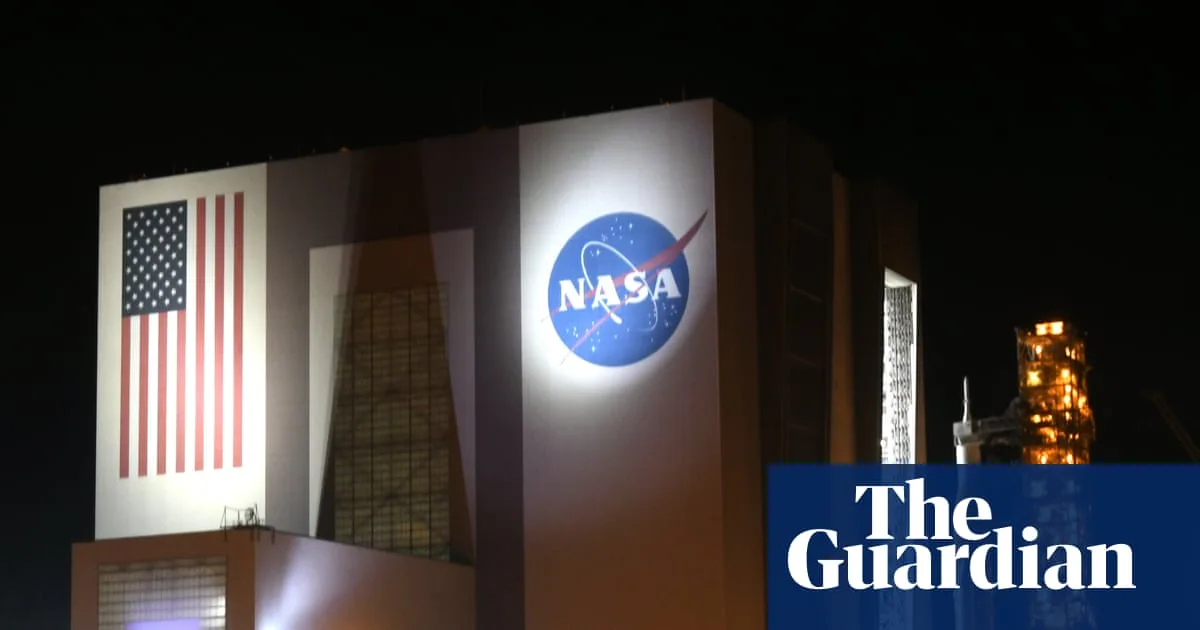
Artemis II Successfully Launches on Historic Moon Mission After Technical Glitches
Artemis II Launches on Historic Moon Mission After Glitches

NASA's Artemis II spacecraft has triumphantly launched from the Kennedy Space Center in Florida, embarking on a groundbreaking ten-day mission to reach the moon for the first time since 1972. The historic lift-off occurred at 6.35pm ET on Wednesday, following the resolution of two systems glitches that briefly threatened to delay the launch.

A Record-Breaking Crewed Mission

Artemis II is carrying four astronauts: NASA's Reid Wiseman, Victor Glover, and Christina Koch, alongside Canadian astronaut Jeremy Hansen. This crew is poised to travel approximately 250,000 miles from Earth by April 6, surpassing the previous record set by Apollo 13 in 1970 and venturing farther into space than any humans before them.

Just four minutes into the journey, Artemis II crossed into space without reported flight issues, with Mission Commander Wiseman enthusiastically noting, "We have a beautiful moonrise. We're headed right at it!"

Wide Pickt banner — collaborative shopping lists app for Telegram, phone mockup with grocery list

Overcoming Technical Challenges

Despite the successful launch, NASA Administrator Jared Isaacman reported that Artemis II experienced a temporary communications problem and continues to address a "controller issue" with the toilet aboard the Orion capsule. Nevertheless, all major systems remain functional, with the crew actively preparing for subsequent orbital maneuvers before the spacecraft is cleared for its lunar trajectory.

Prior to launch, Wiseman declared "Full send" from atop NASA's towering rocket, confirming crew readiness. Artemis II launch director Charlie Blackwell-Thompson delivered an emotional message from mission control, stating the crew carried "the heart of this Artemis team, the daring spirit of the American people and our partners across the globe, and the hopes and dreams of this generation."

The Launch Mechanics and Journey Ahead

Artemis II launched using the Space Launch System (SLS) rocket, with the Orion spacecraft positioned on top. The twin solid rocket boosters ignited first, providing over 75 percent of the thrust needed to lift the 5.75-million-pound rocket. Combined with four RS-25 engines at full thrust, this generated an astonishing 8.8 million pounds of force at liftoff.

Eight minutes into the flight, the main engine cutoff of the SLS core stage completed and separated, marking the end of the first major propulsion phase. Approximately twenty minutes later, the capsule deployed its four solar wings, which will supply continuous electrical power throughout the ten-day mission.

Mission Timeline and Objectives

NASA officials indicated the astronauts would spend most of the night conducting systems checks. On day two, if all systems are operational, Orion will perform the critical translunar injection burn to set course for the moon. The journey will take three to four days, with the spacecraft entering the moon's sphere of influence on day five.

Day six promises to be historic as Artemis II conducts a lunar flyby and travels to the dark side of the moon. During this phase, astronauts will witness a lunar eclipse and reach the farthest point from Earth ever achieved by a crewed mission.

After looping around the moon, Orion will begin its return journey, taking four days back to Earth. During this period, astronauts will conduct safety demonstrations, including testing procedures to shield against solar radiation and practicing manual spacecraft steering.

The mission concludes on day ten with a fiery atmospheric re-entry, where the capsule will endure temperatures near 3,000 degrees Fahrenheit before parachutes deploy for a Pacific Ocean splashdown.

Broader Implications and Reactions

Isaacman emphasized that Artemis II represents "the opening act" and a test mission for NASA's larger ambitions, including building a permanent moon base by 2028. Artemis III is scheduled for 2027 to test operations with commercial landers from SpaceX and Blue Origin.

The launch captivated audiences nationwide, with President Donald Trump congratulating NASA during his address, calling the mission "amazing" and praising the "brave people" aboard. Crowds gathered in Florida and watched televised broadcasts across the country, including at major sporting events like Dodger Stadium in Los Angeles.

Pickt after-article banner — collaborative shopping lists app with family illustration

Canadian participation drew particular attention, with Jeremy Hansen becoming the first Canadian to journey to the moon. Fellow Canadian William Shatner, the iconic Star Trek actor, praised the launch, highlighting Canada's contributions to space exploration and America's technological leadership.

This mission marks a significant milestone in space exploration, rekindling lunar ambitions after five decades and setting the stage for future interplanetary endeavors.