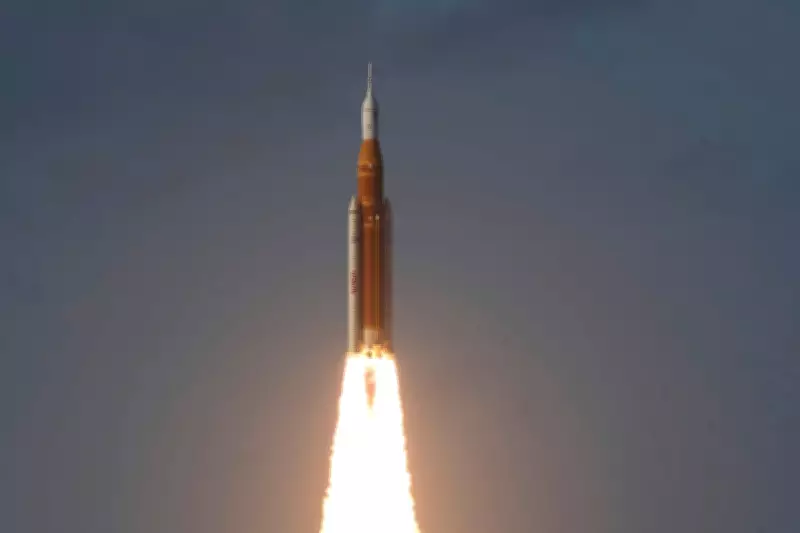
The historic Artemis II mission has successfully launched, marking the first crewed journey to the Moon in over 50 years. Four astronauts—three from the United States and one from Canada—departed from Kennedy Space Center in Florida at 6:35 pm Eastern Time on Wednesday, embarking on a groundbreaking 10-day voyage.
A Milestone in Lunar Exploration
This mission represents a significant leap forward in space exploration, as it is the first time astronauts have traveled to the Moon since the Apollo 17 mission in 1972. The crew will orbit the far side of the Moon, conducting extensive tests without landing on the lunar surface.
Testing Critical Systems for Future Missions
The primary objective of Artemis II is to rigorously evaluate the Orion spacecraft's capabilities. Key systems under scrutiny include life support, navigation, communication, and manual handling. These tests are essential for ensuring the safety and reliability of future missions.

Establishing a Permanent Lunar Presence
The data gathered from this mission will play a crucial role in NASA's plans to establish a permanent lunar settlement. By validating the Orion spacecraft's performance, Artemis II paves the way for the subsequent Artemis III mission, which aims to achieve a crewed Moon landing.
International Collaboration and Broader Goals
Featuring a Canadian astronaut, Artemis II highlights the importance of international cooperation in space exploration. This mission is part of NASA's broader Artemis program, which seeks to return humans to the Moon and eventually send astronauts to Mars.
The successful launch of Artemis II not only reignites lunar exploration but also sets the stage for a new era of space discovery, with implications for scientific research, technological advancement, and human expansion beyond Earth.